Wine Invoice Template
Create professional wine invoices for wine sales and orders with clear order references and itemized quantities. This wine invoice template supports bottle/case orders, delivery and handling, event wine packages, and storage/cellaring—ideal for wine shops, distributors, and suppliers billing customers and business buyers. Download instantly in PDF, Word, or Excel format.
Download Popular Wine Invoice Templates
Download a ready-to-use PDF template or generate your invoice online in seconds.
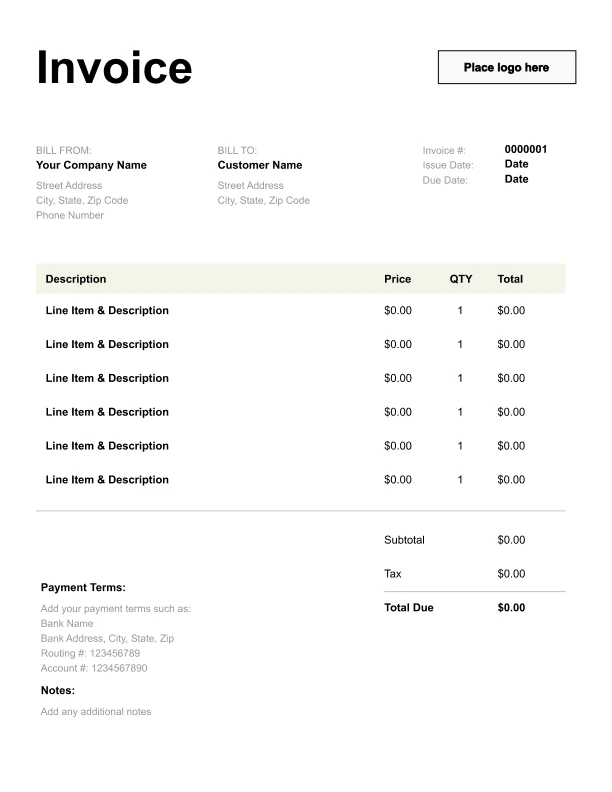
Clean Wine Invoice Template
A simple, versatile layout for services or products.
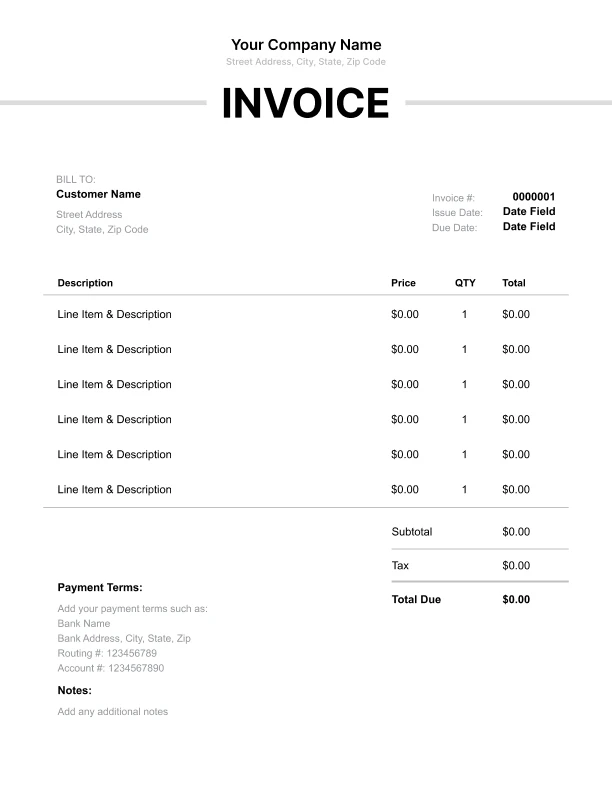
Minimal Wine Invoice Template
Lightweight design that keeps focus on line items.
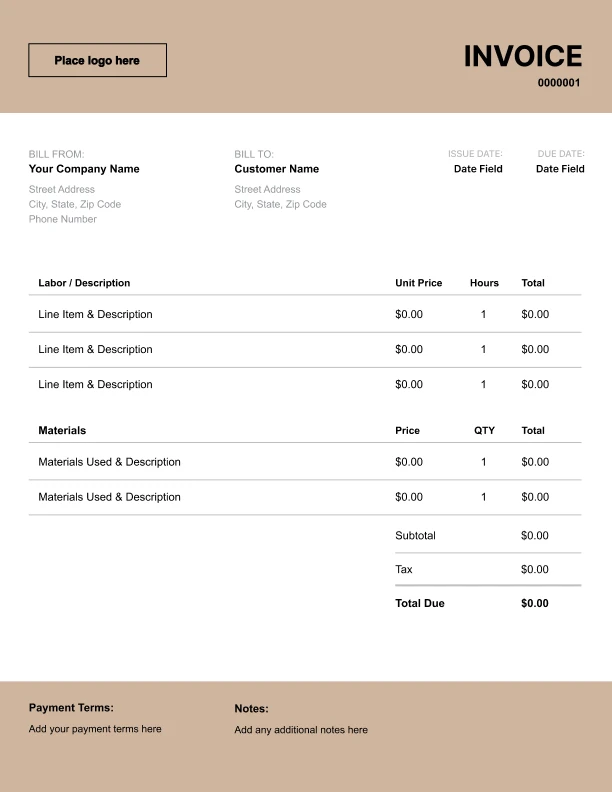
Bold Wine Invoice Template
Strong structure for large projects or milestones.
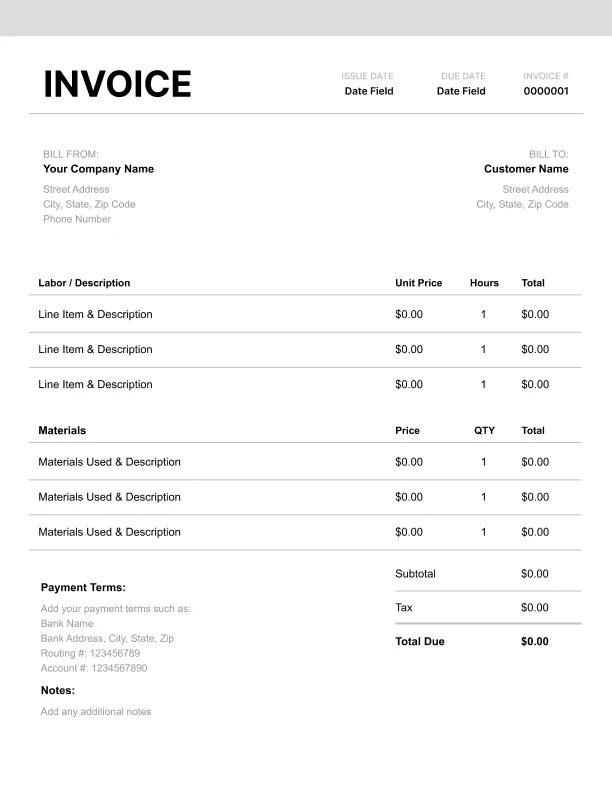
Classic Wine Invoice Template
Timeless styling that works for any industry.
Simple Wine Invoice Template
Easy to scan and perfect for quick billing.
Detailed Wine Invoice Template
Extra room for items, notes, and tax breakdowns.
Modern Wine Invoice Template
Clean sections with a subtle accent header.
Use Free Wine Invoice Generator
Prefer a polished, client-ready invoice fast? The generator auto-calculates totals, applies taxes and discounts, and lets you customize your logo and colors.
Wine Invoice Generator
What to Include on a Wine Invoice
Wine invoices should clearly reference the order and list items in a way that is easy to verify.
Order details- Order number
- Purchase type (retail, wholesale, event)
- Bottles or cases (itemized when needed)
- SKU/vintage notes (optional)
- Delivery fee
- Handling/packaging
- Storage/cellaring
- Event wine package
- Subtotal, tax (if applicable), total due
- Payment terms and record-keeping notes
Itemizing Bottles, Cases, and Vintages
Wine orders often require detail for inventory and accounting.
Best practices- List quantities as bottles or cases
- Add vintage notes or SKUs when clients request them
- Keep product naming consistent with your catalog
Wine Invoices for Retail, Wholesale, and Events
Wine invoices can serve different types of buyers.
Retail
Proof-of-purchase style invoices, usually due on receipt.
Wholesale
Often requires order references and itemized units for business accounting.
Events
May be billed as packages (selection + quantities), with delivery and handling itemized.
Using a “Purchase type” field helps the invoice match the buyer’s use case.
Delivery, Handling, and Storage Charges
Wine orders sometimes include services beyond the product itself.
Common add-ons- Delivery or courier fees
- Protective packaging/handling
- Storage or cellaring