Consignment Invoice Template
Create professional consignment invoices for resale and consignment sales with clear references and itemized items sold. This consignment invoice template supports intake references, sale periods, service fees, authentication, merchandising, and shipping—ideal for consignment shops documenting sales, billing buyers, or supporting consignor records. Download instantly in PDF, Word, or Excel format.
Download Popular Consignment Invoice Templates
Download a ready-to-use PDF template or generate your invoice online in seconds.
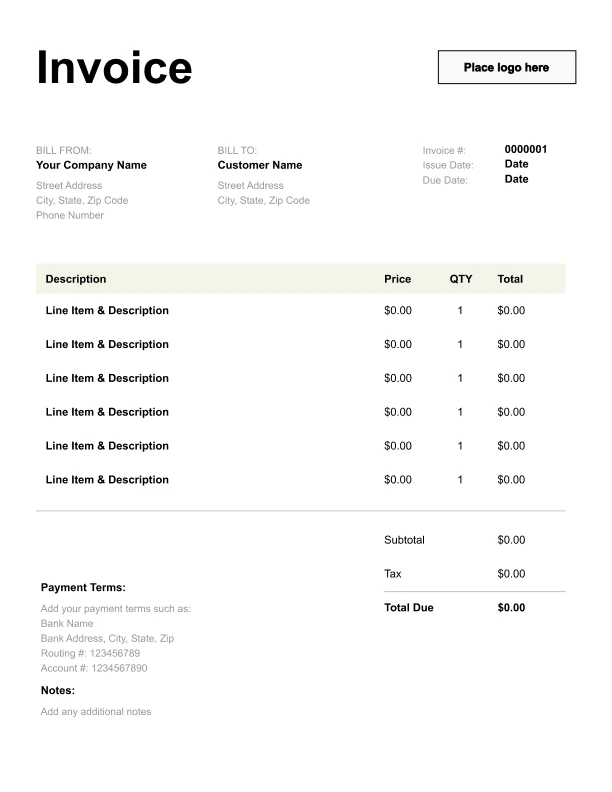
Clean Consignment Invoice Template
A simple, versatile layout for services or products.
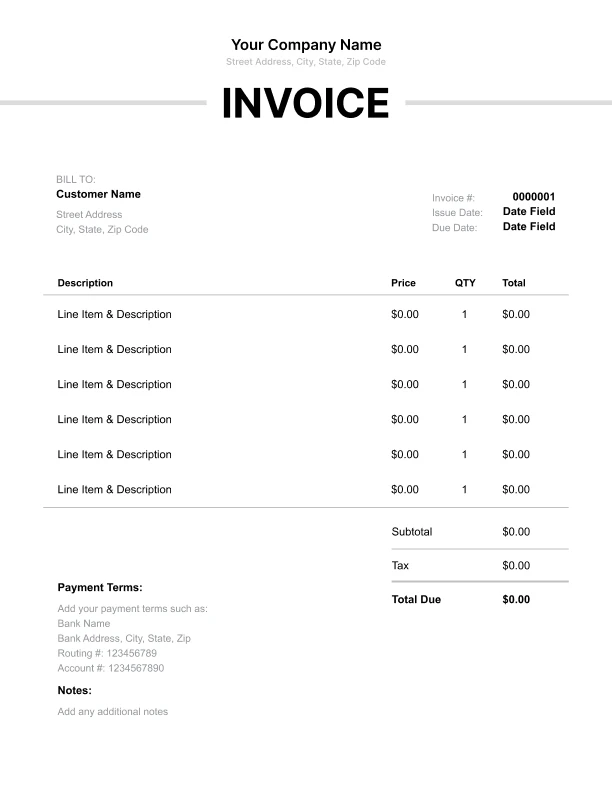
Minimal Consignment Invoice Template
Lightweight design that keeps focus on line items.
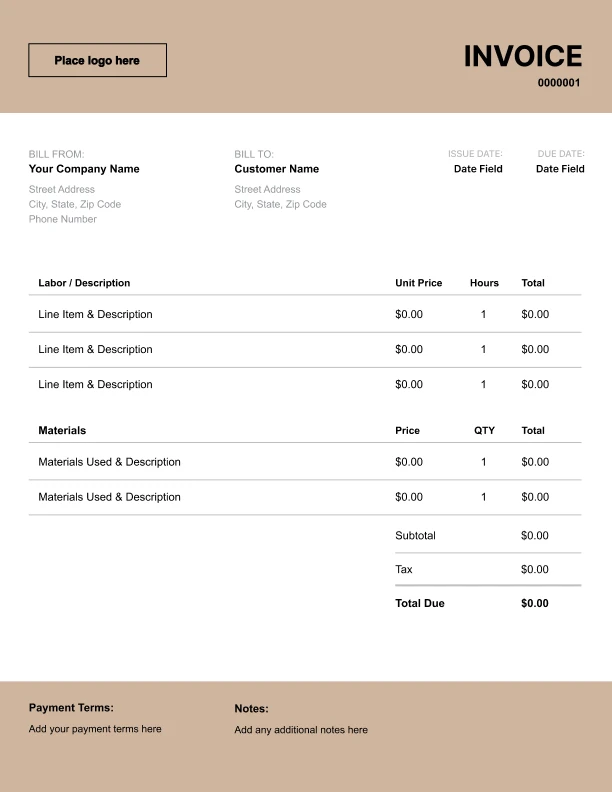
Bold Consignment Invoice Template
Strong structure for large projects or milestones.
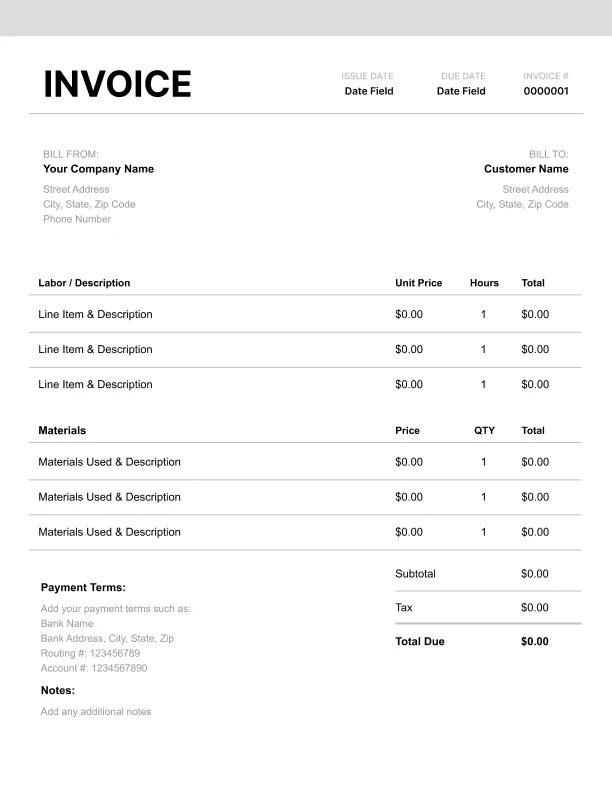
Classic Consignment Invoice Template
Timeless styling that works for any industry.
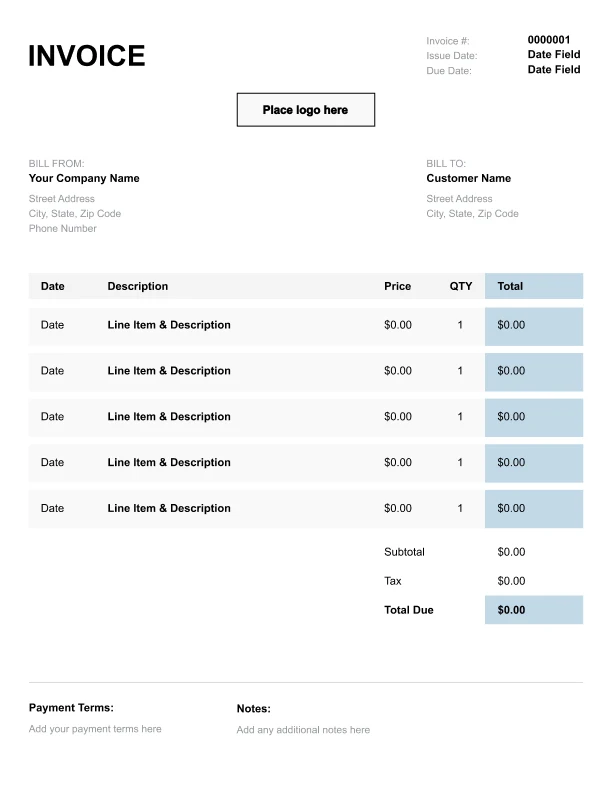
Simple Consignment Invoice Template
Easy to scan and perfect for quick billing.
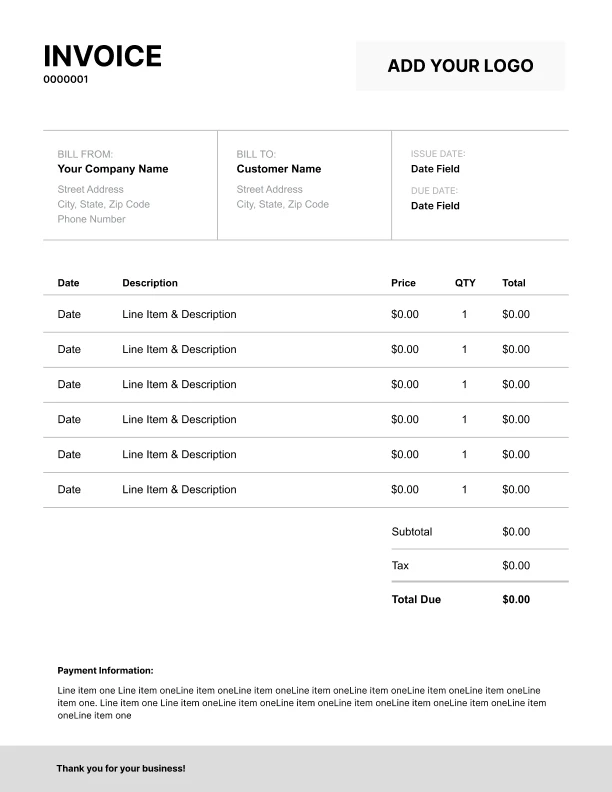
Detailed Consignment Invoice Template
Extra room for items, notes, and tax breakdowns.
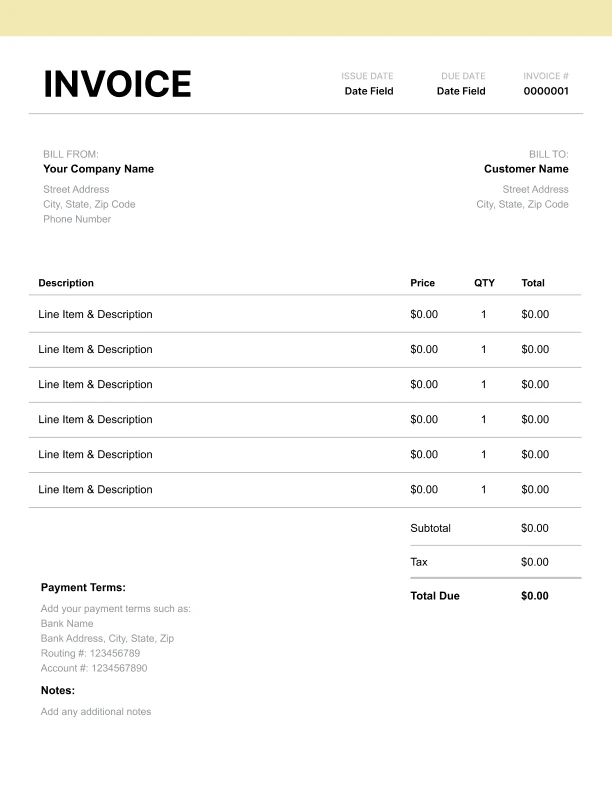
Modern Consignment Invoice Template
Clean sections with a subtle accent header.
Use Free Consignment Invoice Generator
Prefer a polished, client-ready invoice fast? The generator auto-calculates totals, applies taxes and discounts, and lets you customize your logo and colors.
Consignment Invoice Generator
What to Include on a Consignment Invoice
Consignment invoices should make it clear what items were sold and which consignment agreement they belong to.
Consignment details- Consignment agreement/intake reference
- Sale period
- Seller/consignor (optional)
- Item summary (optional)
- Consignment items sold (itemized)
- Consignment service fee
- Listing/intake processing
- Photography/merchandising
- Authentication/verification
- Shipping/handling
- Subtotal, sales tax, total due
- Notes on how consignment payouts are handled (per agreement)
How Consignment Billing Works
Consignment invoices may be used for different purposes depending on the business model.
Buyer-facing invoices
Document items purchased, taxes, and any shipping/handling.
Seller-facing statements
Document items sold and show service fees or processing charges according to the consignment agreement.
Using a “Consignment reference” and “Sale period” helps tie invoices and statements back to the correct intake or contract.
Item Details That Improve Consignment Records
Consignment inventory often requires more descriptive itemization.
Helpful item details- Brand and product type
- Condition notes
- SKU or intake tag (if used)
- Authentication status for premium items
Consignment Service Fees and Add-On Charges
Consignment pricing often includes service-related fees.
Common fees- Service/commission fees (if shown)
- Intake/listing processing
- Photography and merchandising
- Authentication
- Shipping and handling