Construction Invoice Template
Bill projects accurately with our construction invoice template. Designed for contractors, builders, and construction companies that need labor and materials breakdowns, equipment rentals, progress billing, and change order tracking. Add retainage and project details in seconds and download in PDF, Word, or Excel format.
Download Popular Construction Invoice Templates
Download a ready-to-use PDF template or generate your invoice online in seconds.
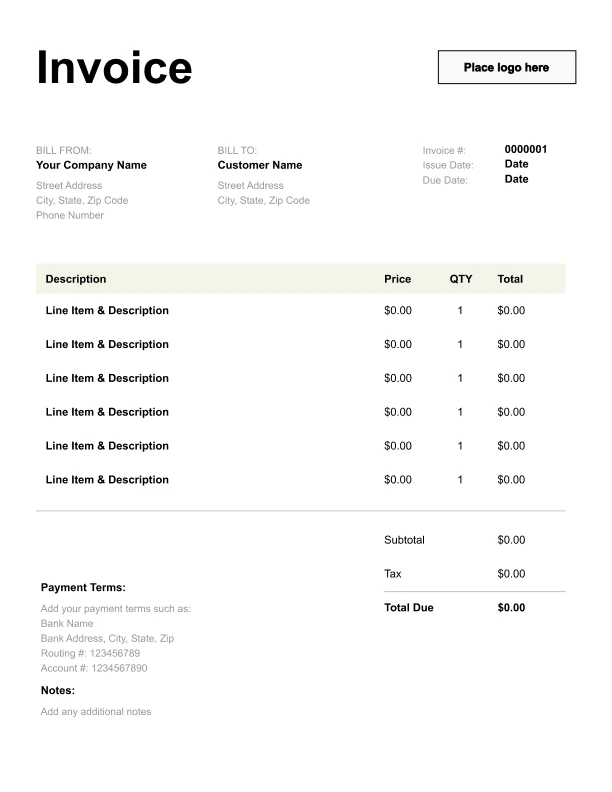
Clean Construction Invoice Template
A simple, versatile layout for services or products.
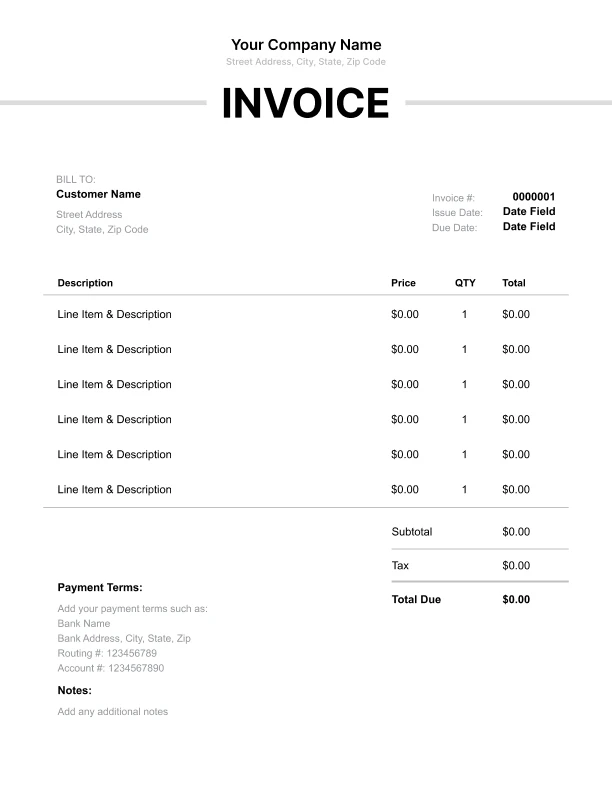
Minimal Construction Invoice Template
Lightweight design that keeps focus on line items.
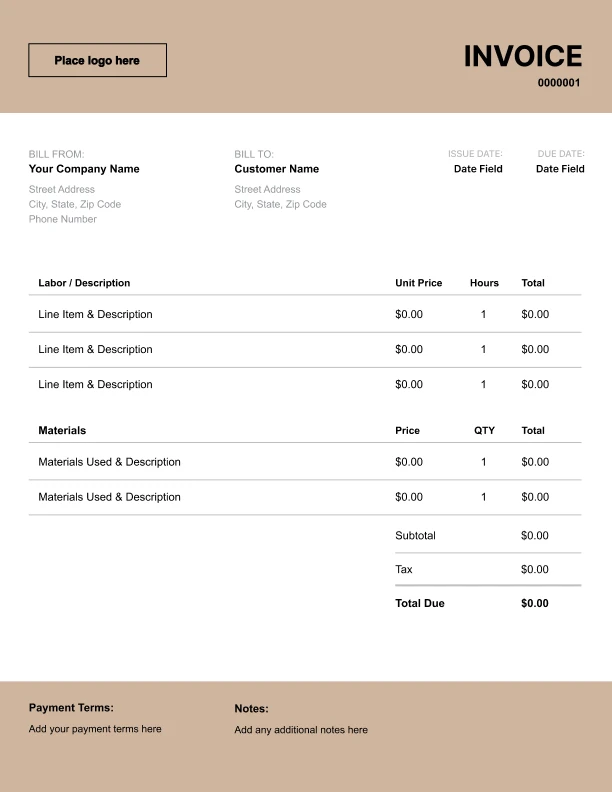
Bold Construction Invoice Template
Strong structure for large projects or milestones.
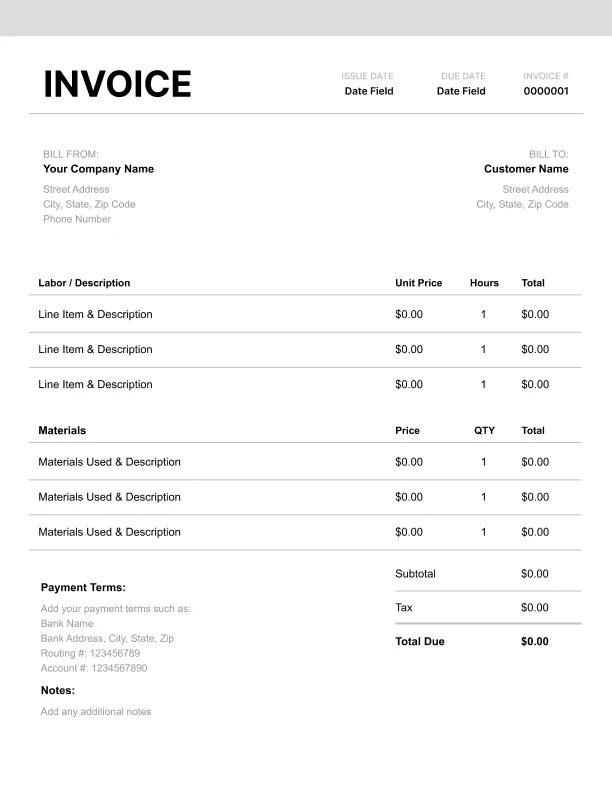
Classic Construction Invoice Template
Timeless styling that works for any industry.
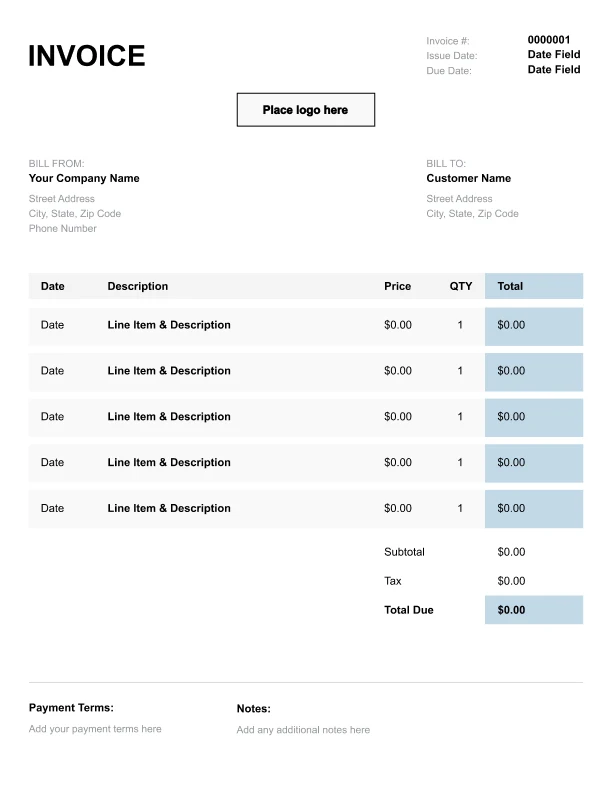
Simple Construction Invoice Template
Easy to scan and perfect for quick billing.
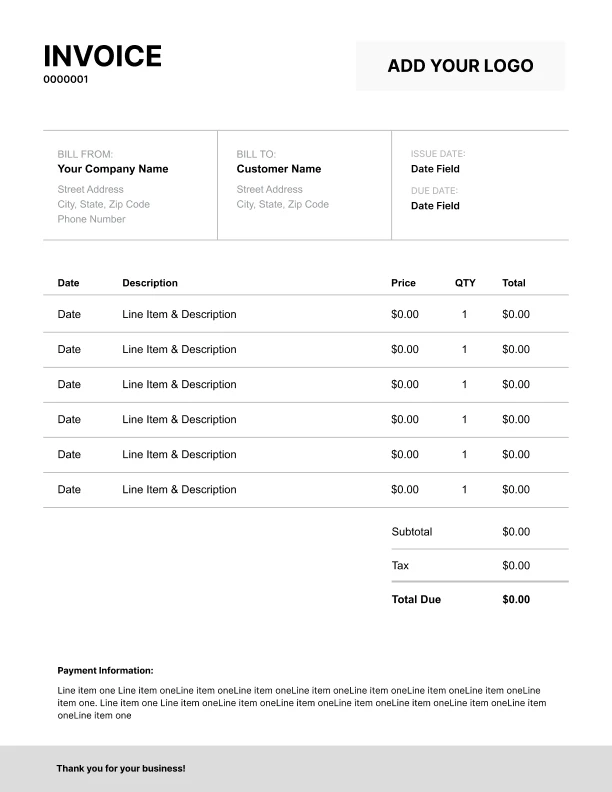
Detailed Construction Invoice Template
Extra room for items, notes, and tax breakdowns.
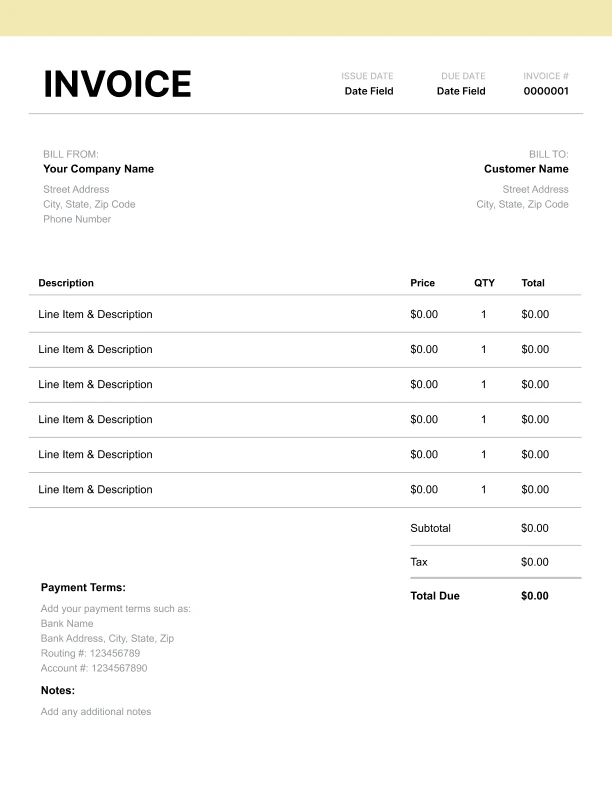
Modern Construction Invoice Template
Clean sections with a subtle accent header.
Use Free Construction Invoice Generator
Prefer a polished, client-ready invoice fast? The generator auto-calculates totals, applies taxes and discounts, and lets you customize your logo and colors.
Construction Invoice Generator
What to Include on a Construction Invoice
Construction invoices often need more detail than standard invoices because payments may be tied to milestones, inspections, or contract terms.
Project and client details- Project name and job site address
- Client/company name and billing contact
- Contract reference (optional)
- Invoice type (progress vs. final)
- Work description by phase or trade
- Labor hours and crew rates (if time-based)
- Materials used (summary or itemized)
- Equipment rentals (days/weeks and rates)
- Subcontractor charges (if applicable)
- Progress billing line items or % complete
- Approved change orders listed separately
- Retainage (percentage withheld) if required
- Permit/inspection fees (if passed through)
- Subtotal, tax, total due
- Amount previously billed/paid (optional)
- Current amount due
- Payment terms per contract
Progress Billing and Schedule of Values
Many construction projects are billed in stages rather than all at once. Progress billing helps you maintain cash flow and aligns payment with work completed.
How progress billing commonly works- Break the project into phases or cost categories (a schedule of values)
- Bill based on completion milestones or % complete
- Show what is billed this period vs. total contract value
- “Work completed to date” summary
- The period covered (e.g., Week 3, Month 1)
- A note on inspections/approvals if required
- Any materials stored on site (if billed)
Change Orders: How to Invoice Additional Work
Change orders are one of the biggest causes of construction payment disputes. Your invoice should separate contract work from approved extras.
Best practices- List change orders as separate line items
- Note approval (“approved on [date]” or “approved by [name]” if you track it)
- Describe the added scope clearly (materials + labor)
- Avoid rolling change order costs into base scope lines
- “CO#03 — Additional framing for layout change”
- “CO#05 — Upgrade: premium tile + labor”
Retainage and Final Payment
Some construction contracts withhold a portion of payment (retainage) until final completion and acceptance.
How to show retainage- Add a field for retainage percentage (e.g., 5% or 10%)
- Display retainage withheld as a separate line or note
- Make the current amount due clear after retainage
- Label the invoice as “Final” when applicable
- Reference punch list completion if relevant
- Confirm retainage release conditions (per contract)