Small Business Invoice Template
Create professional invoices for your small business with our free template. Simple and customizable design that works for any industry. Track payments, maintain records, and present a professional image to your customers. Download instantly in PDF, Word, or Excel format.
Download Popular Small Business Invoice Templates
Download a ready-to-use PDF template or generate your invoice online in seconds.
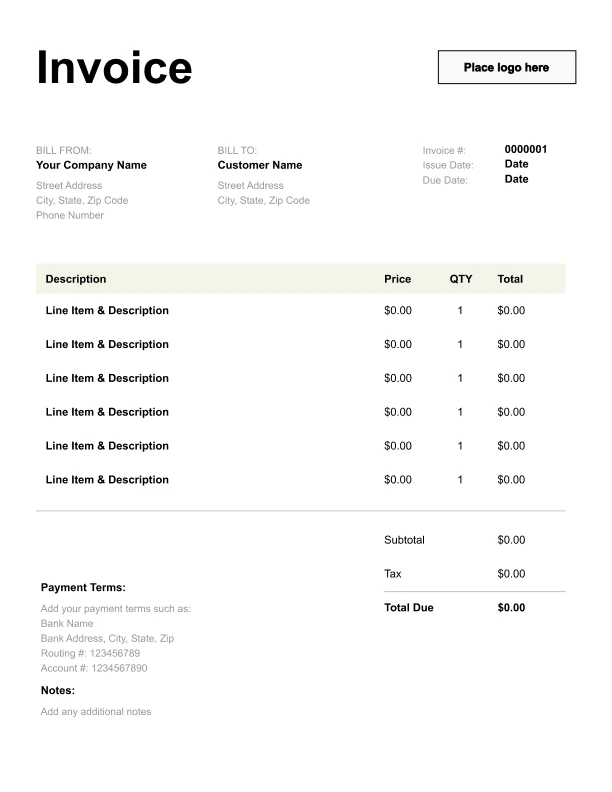
Clean Small Business Invoice Template
A simple, versatile layout for services or products.
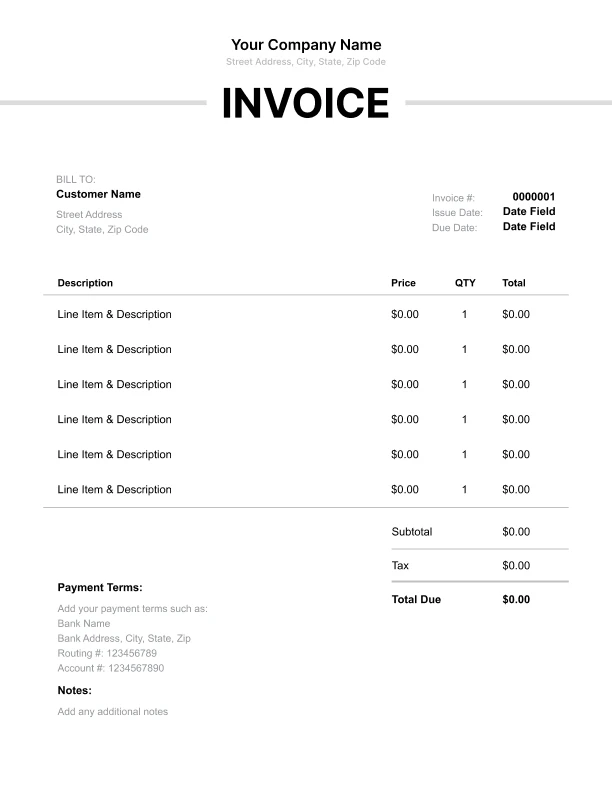
Minimal Small Business Invoice Template
Lightweight design that keeps focus on line items.
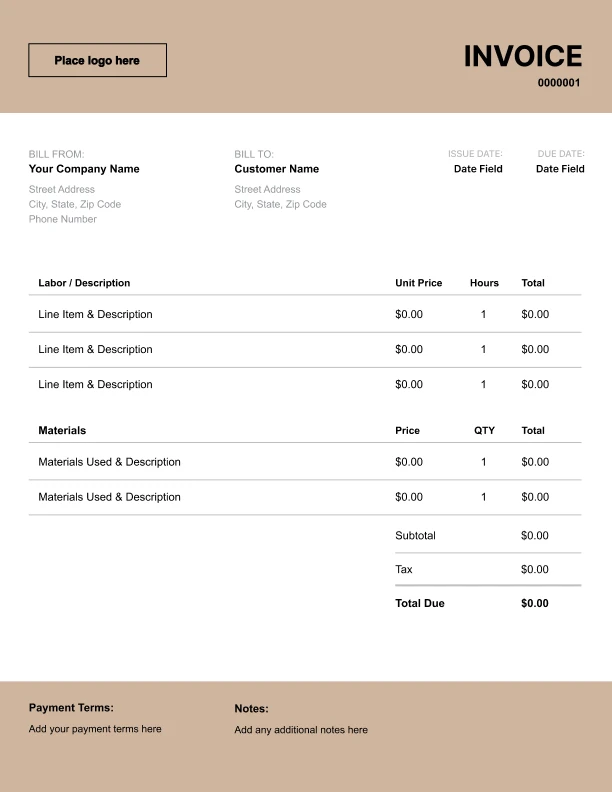
Bold Small Business Invoice Template
Strong structure for large projects or milestones.
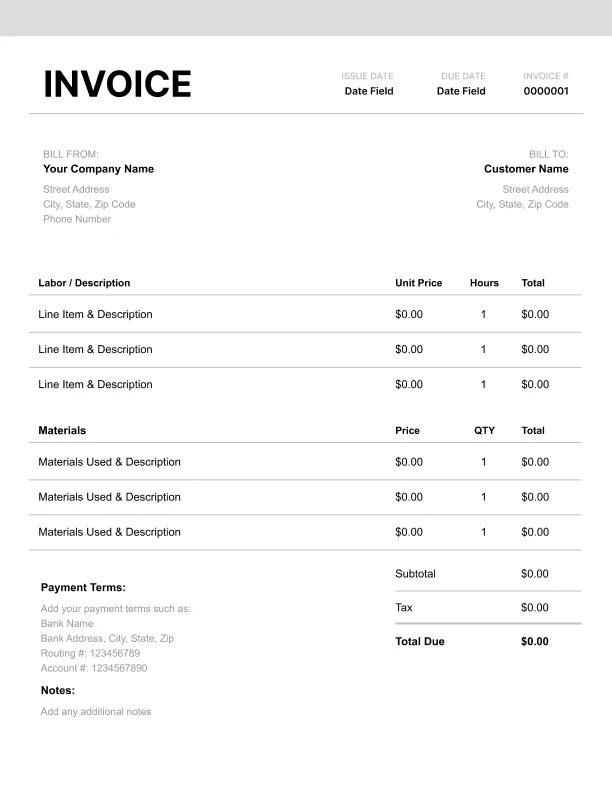
Classic Small Business Invoice Template
Timeless styling that works for any industry.
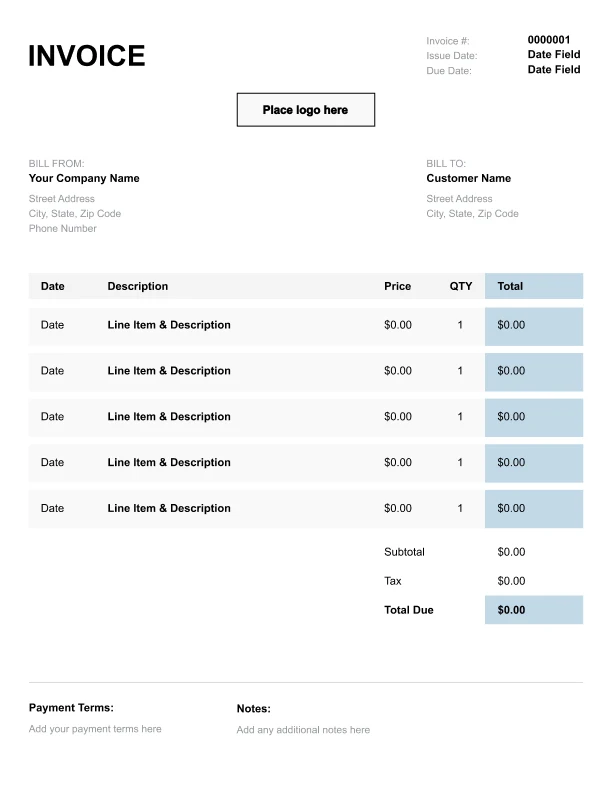
Simple Small Business Invoice Template
Easy to scan and perfect for quick billing.
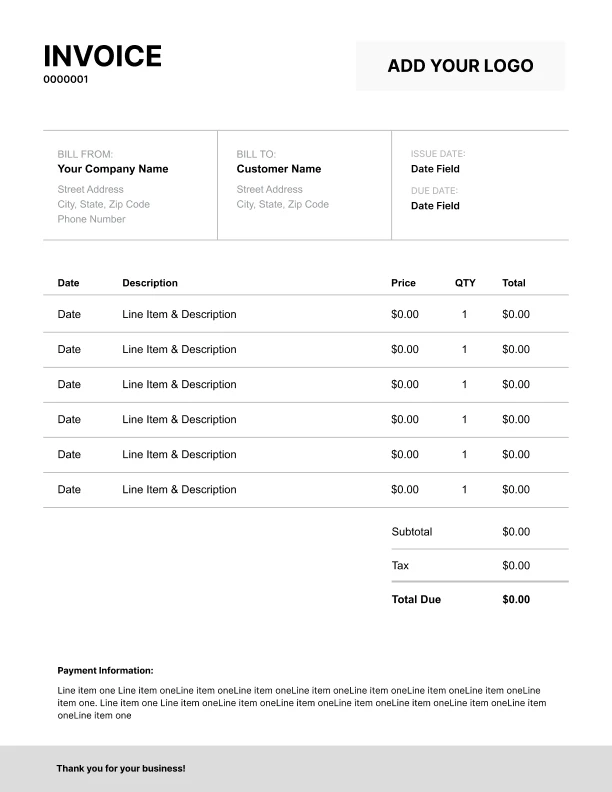
Detailed Small Business Invoice Template
Extra room for items, notes, and tax breakdowns.
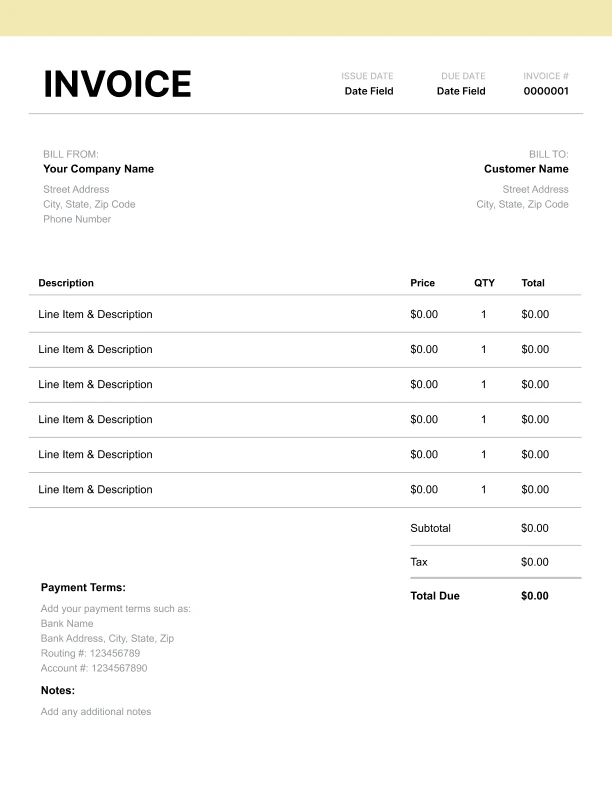
Modern Small Business Invoice Template
Clean sections with a subtle accent header.
Use Free Small Business Invoice Generator
Prefer a polished, client-ready invoice fast? The generator auto-calculates totals, applies taxes and discounts, and lets you customize your logo and colors.
Small Business Invoice Generator
Why Professional Invoices Matter for Small Businesses
Professional invoices do more than request payment - they build credibility and protect your business.
First Impressions Count
Your invoice is often the last touchpoint with customers. A clean, professional invoice reinforces that you run a legitimate, organized business worthy of their continued patronage.
Legal Protection
A proper invoice serves as a legal record of the transaction. It documents what was sold, when, for how much, and under what terms. This protects you in disputes or audits.
Faster Payments
Clear, professional invoices get paid faster. When customers can easily understand what they owe and how to pay, they're more likely to pay promptly.
Better Record Keeping
Consistent invoicing creates organized financial records. This simplifies tax preparation, helps track business performance, and makes audits less stressful.
Business Identity
Branded invoices with your logo and consistent formatting reinforce your business identity and professionalism.
Essential Elements of a Small Business Invoice
Include these elements on every invoice:
Header Section- Your business name and logo
- Business address
- Phone number and email
- Website (optional)
- Tax ID or business number (if applicable)
- Invoice number (unique, sequential)
- Invoice date
- Due date
- Payment terms
- Customer/company name
- Billing address
- Contact person
- Email address
- Clear description of products/services
- Quantity
- Unit price
- Line total
- Any applicable discounts
- Subtotal
- Tax (if applicable)
- Shipping (if applicable)
- Total amount due
- Accepted payment methods
- Bank details or payment links
- Check payable instructions
- Thank you message
- Return/refund policy (if relevant)
- Contact for questions
Invoicing Best Practices for Small Businesses
Follow these practices to improve cash flow and reduce payment delays:
Invoice Promptly
Send invoices as soon as work is complete or products are delivered. The longer you wait, the less urgent payment feels to customers.
- Use descriptive line items (not just "Services")
- Include dates of service
- Reference PO numbers or quotes
- Break down complex jobs
- State due date prominently
- Specify accepted payment methods
- Include late payment policy
- Offer early payment discounts (2% Net 10)
- Include direct payment links
- Accept multiple payment methods
- Provide clear bank details
- Consider online payment platforms
- Send reminder before due date
- Follow up immediately when overdue
- Have a standard collections process
- Document all communications
- Number invoices sequentially
- Record payment dates
- Note partial payments
- Keep copies of all invoices
Common Invoicing Mistakes to Avoid
These errors can delay payment or create problems:
Missing Information- No invoice number (makes tracking hard)
- Missing due date (no urgency)
- Incomplete contact info
- No payment instructions
- Vague line items like "Services"
- No dates for work performed
- Missing quantities or rates
- Bundled items without breakdown
- Limited payment options
- Missing bank details
- No online payment option
- Unclear instructions
- Invoicing too late
- Wrong due dates
- Not following up on overdue invoices
- Inconsistent invoicing schedule
- Typos and errors
- Inconsistent formatting
- Missing business info
- No branding
- Wrong tax calculations
- Missing tax ID
- Not separating taxable items
- Incorrect tax rates
Setting Payment Terms for Your Small Business
Choose payment terms that balance cash flow needs with customer expectations:
Common Payment Terms
Due on Receipt
Payment expected immediately. Best for small purchases or one-time customers.
Net 15
Payment due in 15 days. Good balance of urgency and flexibility.
Net 30
Industry standard. Payment due in 30 days. Expected by most B2B customers.
Net 60/90
Extended terms for large customers or specific industries. Use carefully as it impacts cash flow.
- Your cash flow needs
- Industry norms
- Customer relationship
- Order size
- Customer payment history
- Offer early payment discount (2/10 Net 30 = 2% off if paid in 10 days)
- Charge late fees (state clearly on invoice)
- Require deposits for large orders
- Accept credit cards (instant payment)
- Check credit for new B2B customers
- Require deposits from new customers
- Shorter terms for first-time buyers
- Credit limits for repeat customers