Commercial Invoice Template
Create professional commercial invoices for international trade and customs clearance. Our template includes all required fields for export documentation, HS codes, Incoterms, and shipping details. Download instantly in PDF, Word, or Excel format.
Download Popular Commercial Invoice Templates
Download a ready-to-use PDF template or generate your invoice online in seconds.
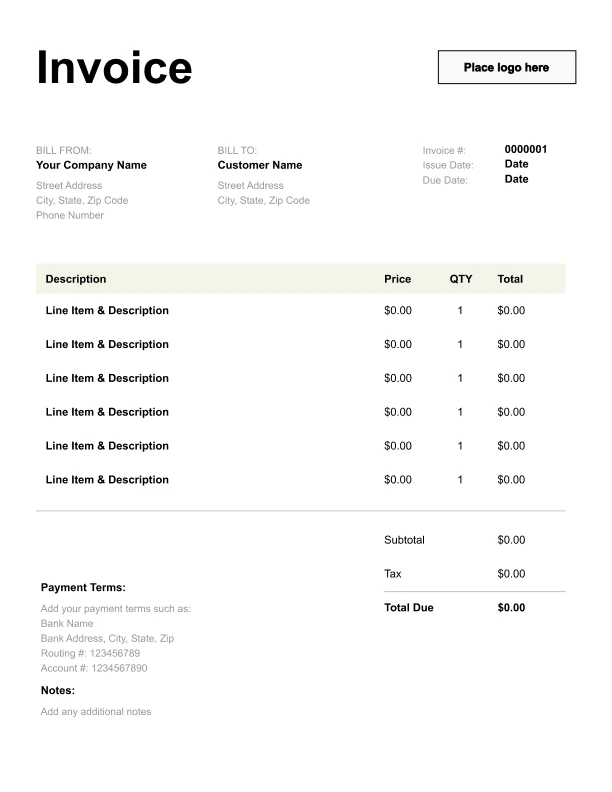
Clean Commercial Invoice Template
A simple, versatile layout for services or products.
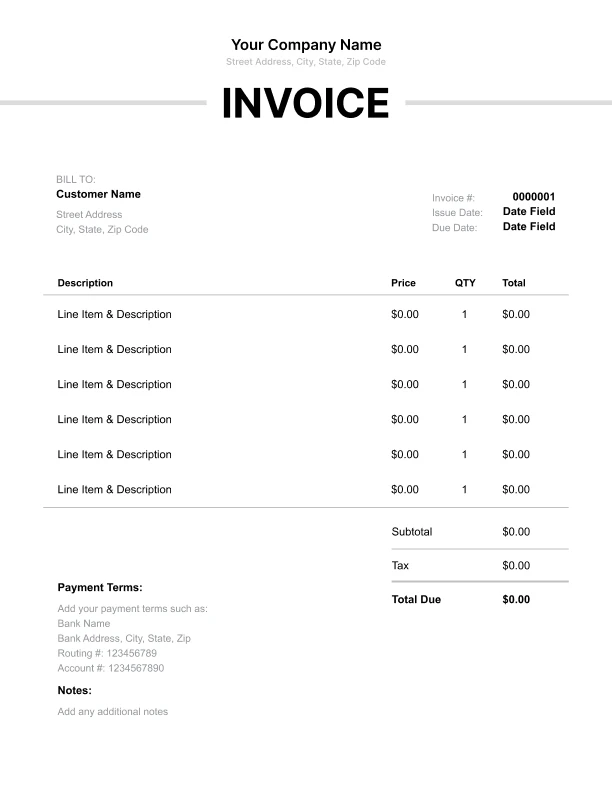
Minimal Commercial Invoice Template
Lightweight design that keeps focus on line items.
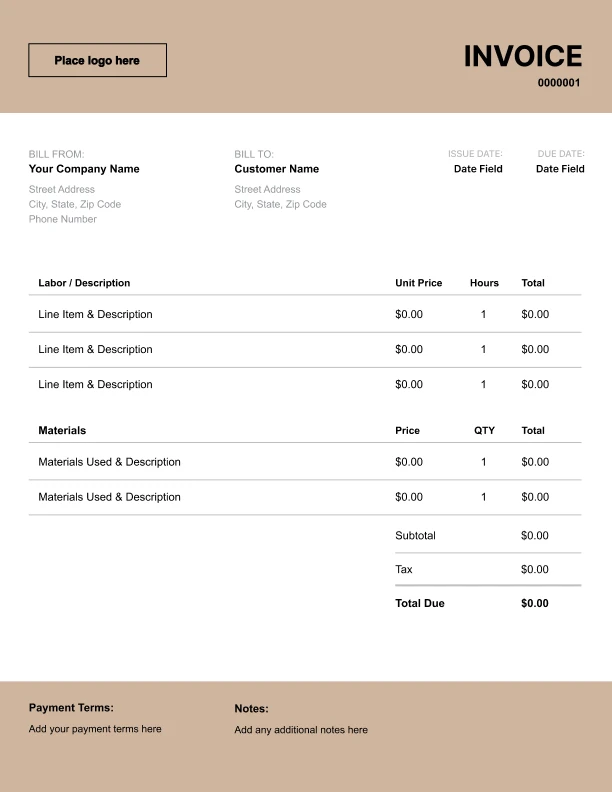
Bold Commercial Invoice Template
Strong structure for large projects or milestones.
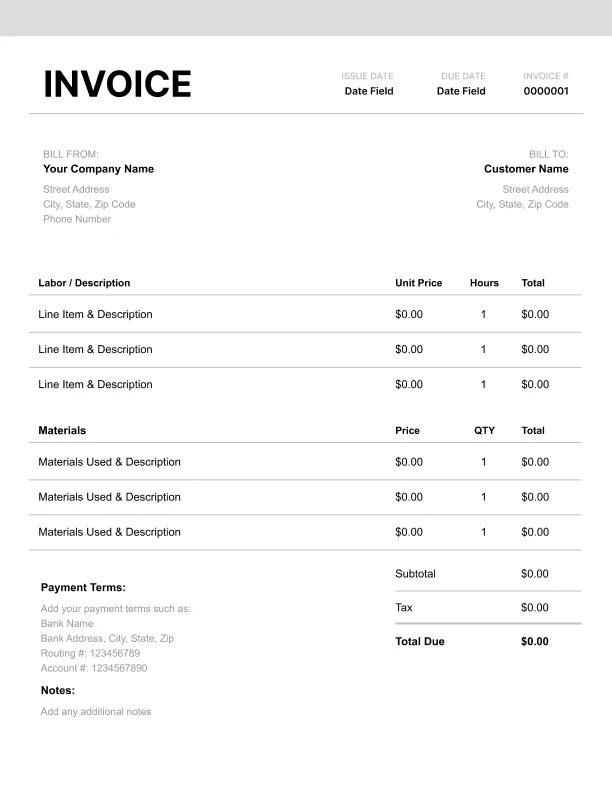
Classic Commercial Invoice Template
Timeless styling that works for any industry.
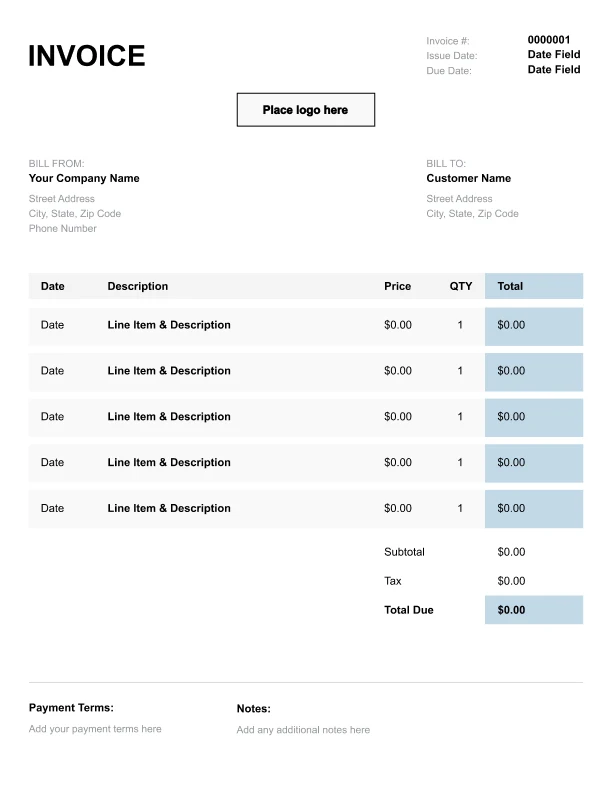
Simple Commercial Invoice Template
Easy to scan and perfect for quick billing.
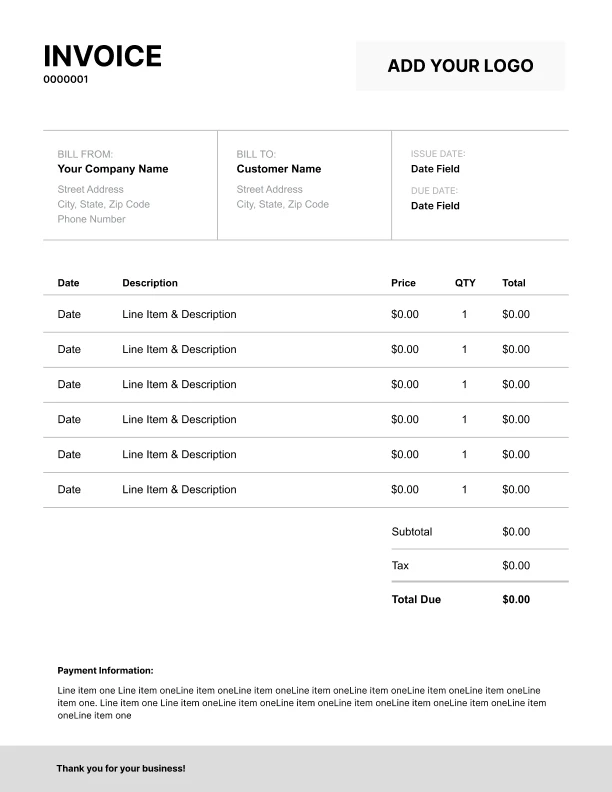
Detailed Commercial Invoice Template
Extra room for items, notes, and tax breakdowns.
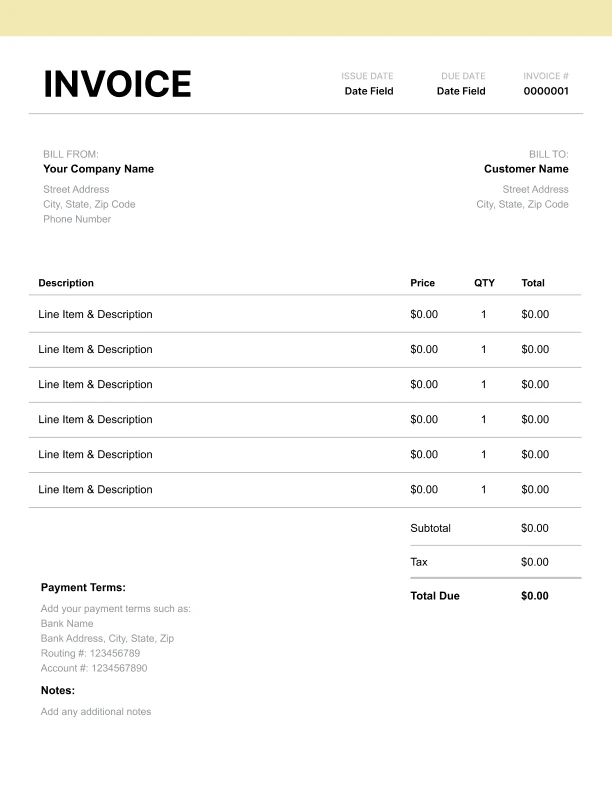
Modern Commercial Invoice Template
Clean sections with a subtle accent header.
Use Free Commercial Invoice Generator
Prefer a polished, client-ready invoice fast? The generator auto-calculates totals, applies taxes and discounts, and lets you customize your logo and colors.
Commercial Invoice Generator
What Is a Commercial Invoice?
A commercial invoice is a legal document used in international trade that serves as a customs declaration and provides details about the transaction between exporter and importer.
Primary Functions:- Serves as proof of the transaction between buyer and seller
- Used by customs authorities to assess duties and taxes
- Required for clearing goods through customs
- Acts as the basis for import/export documentation
- Selling goods internationally
- Shipping products across borders
- Exporting merchandise for commercial purposes
- Any cross-border B2B transaction
Required Fields on a Commercial Invoice
Customs authorities require specific information to process international shipments:
Seller/Exporter Information- Company name and address
- Contact person and phone number
- Tax ID or EIN (Employer Identification Number)
- Export license number (if applicable)
- Company name and address
- Contact person and phone number
- VAT or tax registration number
- Import license number (if applicable)
- Invoice number and date
- Purchase order or reference number
- Country of origin for each item
- Port of export and port of entry
- Shipment method (air, sea, ground)
- Carrier name and tracking number
- Detailed description of each item
- Quantity and unit of measure
- Unit price and total value
- HS (Harmonized System) code
- Country of manufacture
- Weight (gross and net)
- Currency of transaction
- Total commercial value
- Incoterms (shipping terms)
- Payment terms
- Freight and insurance costs (if applicable)
- Signature and date
- Certification of accuracy
- Export compliance statement
Understanding Incoterms for Commercial Invoices
Incoterms (International Commercial Terms) define who is responsible for costs and risks during shipping:
Common Incoterms:
EXW (Ex Works)
Buyer assumes all costs and risks from seller's location. Seller's only obligation is to make goods available.
FOB (Free on Board)
Seller delivers goods on board the vessel. Risk transfers when goods pass the ship's rail. Common for sea freight.
CIF (Cost, Insurance, Freight)
Seller pays for shipping and insurance to the destination port. Risk transfers at the port of shipment.
DDP (Delivered Duty Paid)
Seller assumes all costs and risks including import duties and taxes. Maximum seller obligation.
DAP (Delivered at Place)
Seller delivers goods to a named destination. Buyer handles import clearance and duties.
- New to exporting? Start with FOB or CIF
- Want minimal responsibility? Use EXW
- Want to control the entire process? Use DDP
- Negotiating with buyers? Consider their preferences
HS Codes and Product Classification
HS (Harmonized System) codes are standardized numerical codes that classify traded products internationally.
What Are HS Codes?- 6-digit international standard (minimum)
- Additional digits added by individual countries
- Used to determine duty rates and regulations
- Required on all commercial invoices
- 84 = Chapter (Nuclear reactors, boilers, machinery)
- 8471 = Heading (Automatic data processing machines)
- 8471.30 = Subheading (Portable machines)
- 8471.30.01 = National subdivision
- Incorrect codes cause customs delays
- Wrong classification may result in penalties
- Affects duty rates and trade compliance
- Can trigger audits or shipment seizures
Customs Compliance Tips
Ensure smooth customs clearance with these best practices:
Documentation Checklist:- Commercial invoice (3-5 copies)
- Packing list
- Bill of lading or airway bill
- Certificate of origin (if required)
- Export license (for controlled goods)
- Import permits (destination country)
- Undervaluing goods (illegal and causes penalties)
- Incomplete product descriptions
- Missing or incorrect HS codes
- Omitting required certifications
- Inconsistent information across documents
- Price paid for goods
- Commissions (except buying commissions)
- Packing costs
- Royalties or license fees (if applicable)
- Keep copies for 5+ years
- Store electronically and physically
- Include all correspondence
- Document any amendments
- Customs brokers for complex shipments
- Freight forwarders for logistics
- Trade compliance consultants for regulations