Freight Invoice Template
Create professional freight invoices with clear linehaul charges, fuel surcharges, and accessorial fees. This freight invoice template supports BOL and PRO references, origin-to-destination details, and shipment information like weight, class, and pallet counts—ideal for LTL and freight carriers. Download instantly in PDF, Word, or Excel format.
Download Popular Freight Invoice Templates
Download a ready-to-use PDF template or generate your invoice online in seconds.
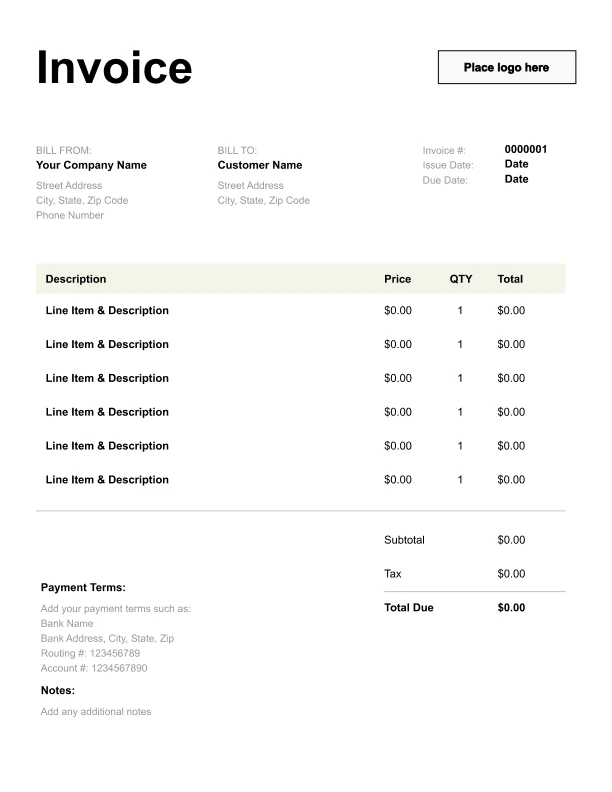
Clean Freight Invoice Template
A simple, versatile layout for services or products.
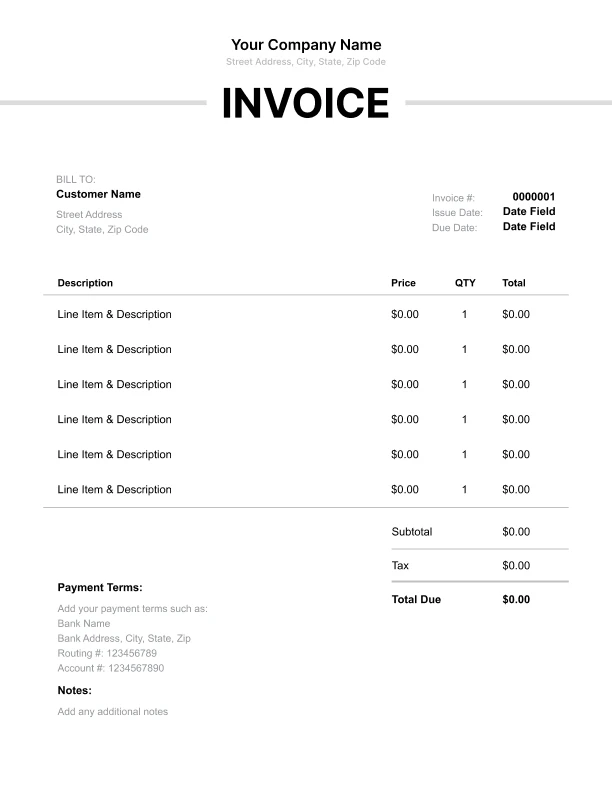
Minimal Freight Invoice Template
Lightweight design that keeps focus on line items.
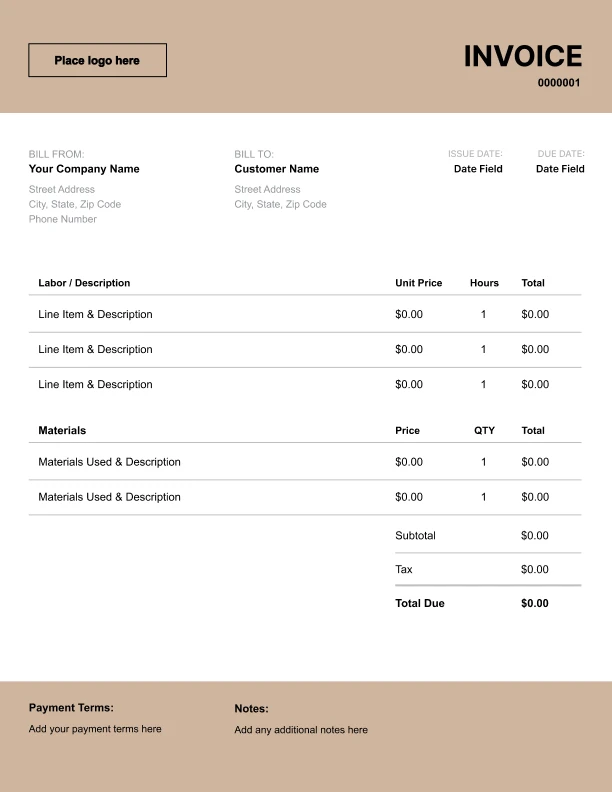
Bold Freight Invoice Template
Strong structure for large projects or milestones.
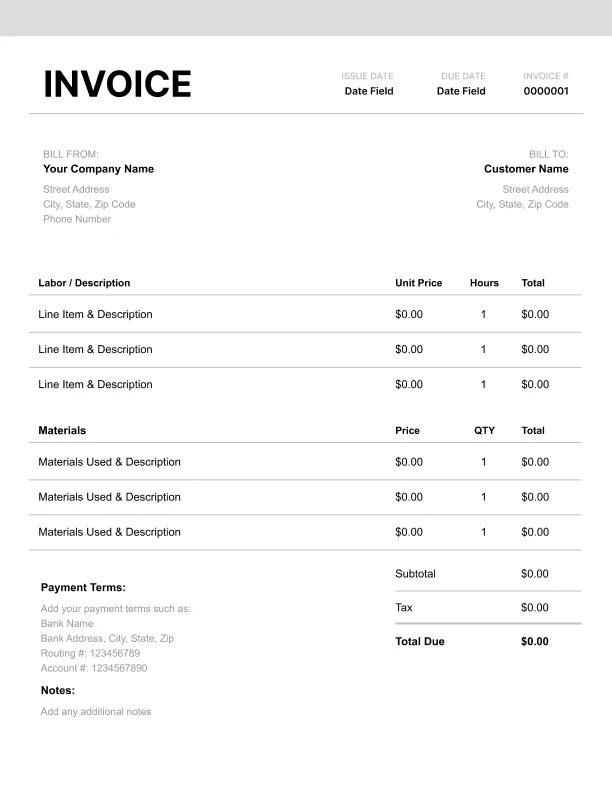
Classic Freight Invoice Template
Timeless styling that works for any industry.
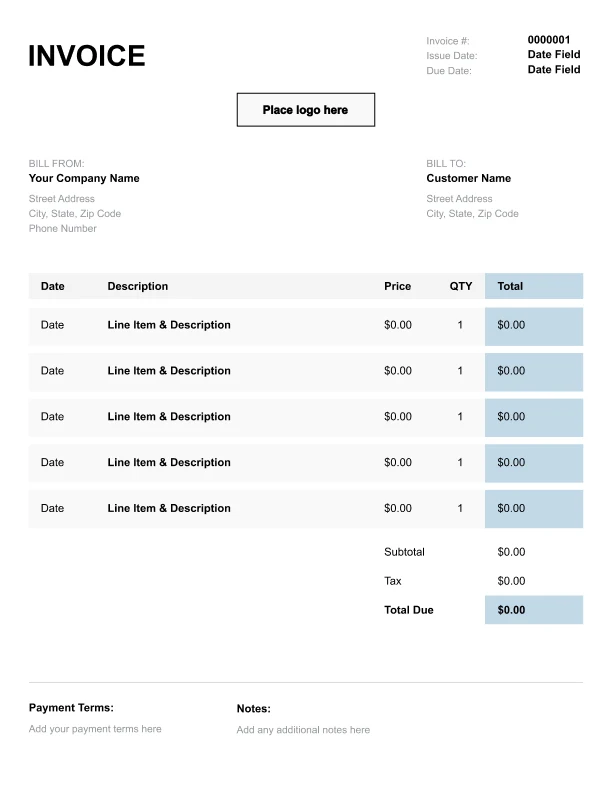
Simple Freight Invoice Template
Easy to scan and perfect for quick billing.
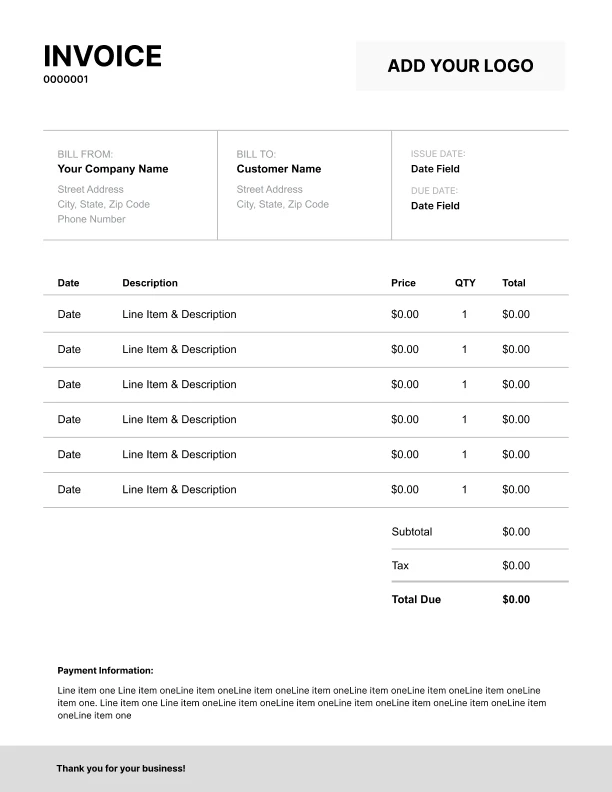
Detailed Freight Invoice Template
Extra room for items, notes, and tax breakdowns.
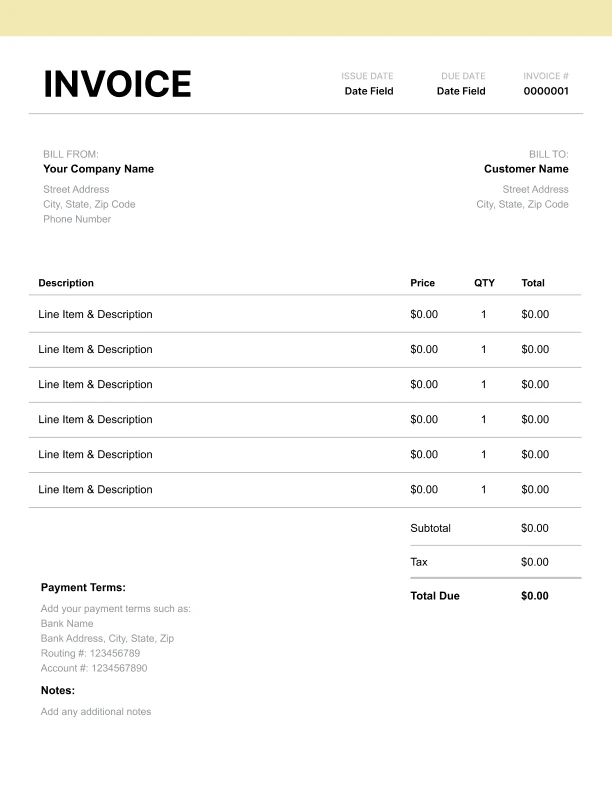
Modern Freight Invoice Template
Clean sections with a subtle accent header.
Use Free Freight Invoice Generator
Prefer a polished, client-ready invoice fast? The generator auto-calculates totals, applies taxes and discounts, and lets you customize your logo and colors.
Freight Invoice Generator
What to Include on a Freight Invoice
Freight invoices should be easy for shippers and accounts payable teams to reconcile against shipping documents.
Shipment identification- BOL number (Bill of Lading)
- PRO/shipment reference number
- Origin → destination route
- Weight and class (for LTL)
- Pallet count or pieces
- Service type (standard, expedited)
- Linehaul (base freight charge)
- Fuel surcharge
- Pickup and delivery accessorial fees
- Liftgate service
- Appointment delivery
- Detention/wait time
- Subtotal, tax (if applicable), total due
- Payment terms and instructions
Freight Charges: Linehaul, Fuel, and Accessorials
Freight invoices commonly include three parts:
1) Linehaul
The base shipping charge for the route and service level.
2) Fuel surcharge
An additional charge that changes with fuel conditions and carrier schedules.
3) Accessorials
Extra charges for special handling or non-standard pickup/delivery conditions.
Itemizing these separately helps customers understand the total and prevents disputes when accessorial fees apply.
Common Freight Accessorial Fees
Accessorial fees are a frequent reason invoices vary.
Common accessorials- Liftgate pickup/delivery
- Limited access location (schools, construction sites, etc.)
- Appointment delivery
- Detention/wait time
- Residential delivery (when applicable)
- Redelivery or reconsignment
BOL, PRO Numbers, and Supporting Documents
Shipping departments and finance teams rely on references.
Best practices- Always include BOL and PRO/shipment reference
- Use an “Origin → destination” field
- Offer proof of delivery (POD) when needed