Fencing Invoice Template
Create professional fencing invoices for fence installation and repair projects with clear measurements and material charges. This fencing invoice template supports labor hours, materials, linear foot pricing, gate installs, repairs, and haul-away—ideal for fencing contractors billing residential and commercial clients. Download instantly in PDF, Word, or Excel format.
Download Popular Fencing Invoice Templates
Download a ready-to-use PDF template or generate your invoice online in seconds.
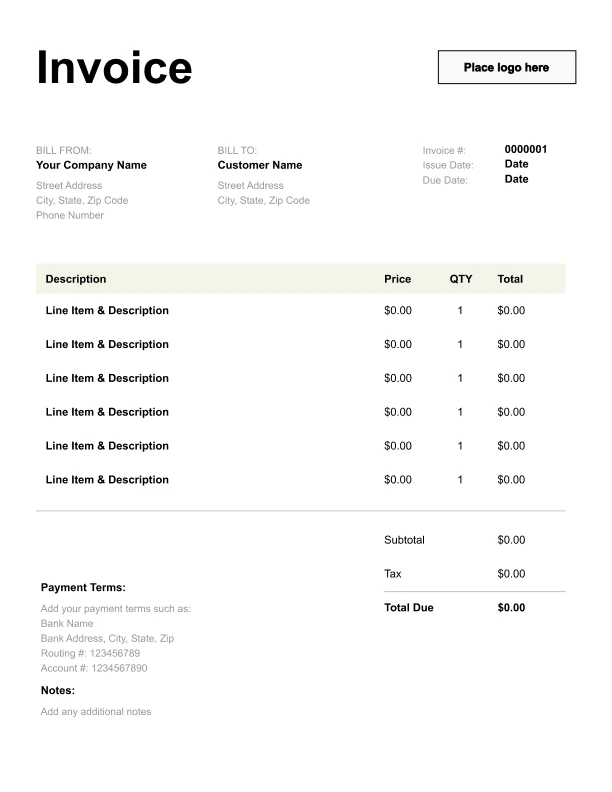
Clean Fencing Invoice Template
A simple, versatile layout for services or products.
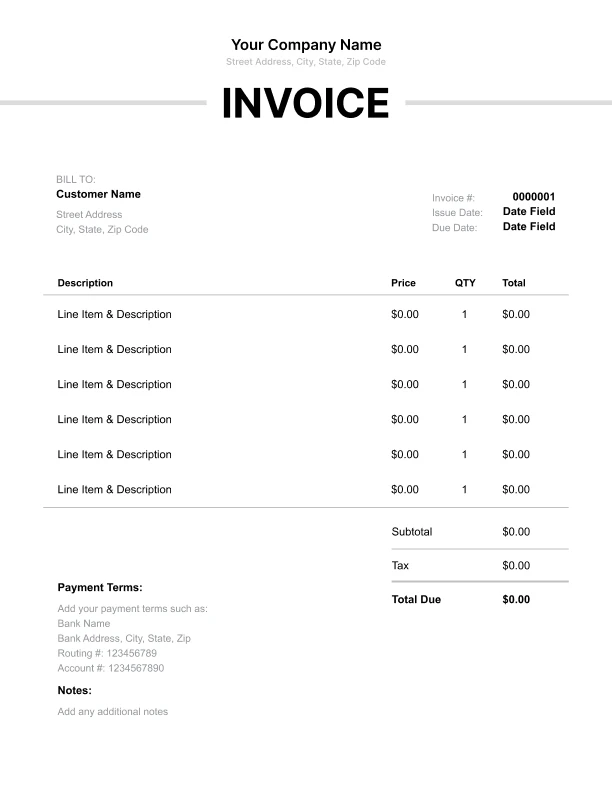
Minimal Fencing Invoice Template
Lightweight design that keeps focus on line items.
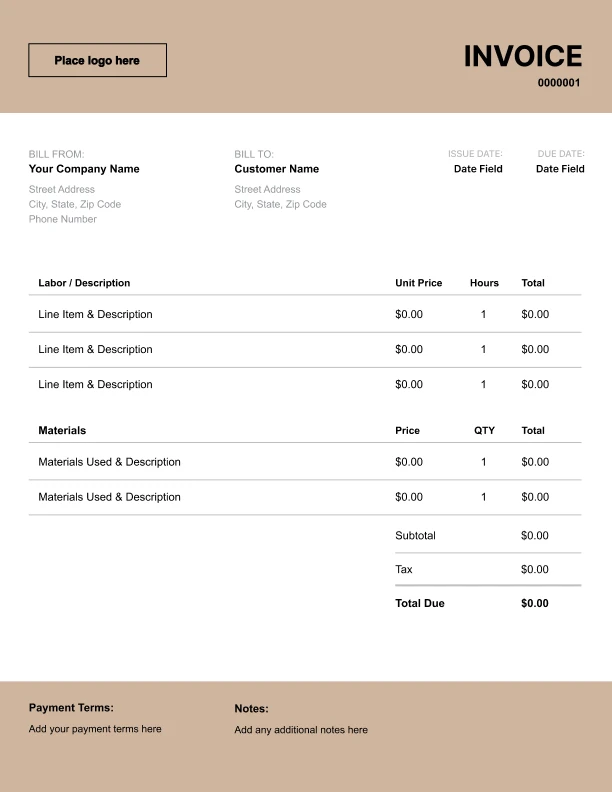
Bold Fencing Invoice Template
Strong structure for large projects or milestones.
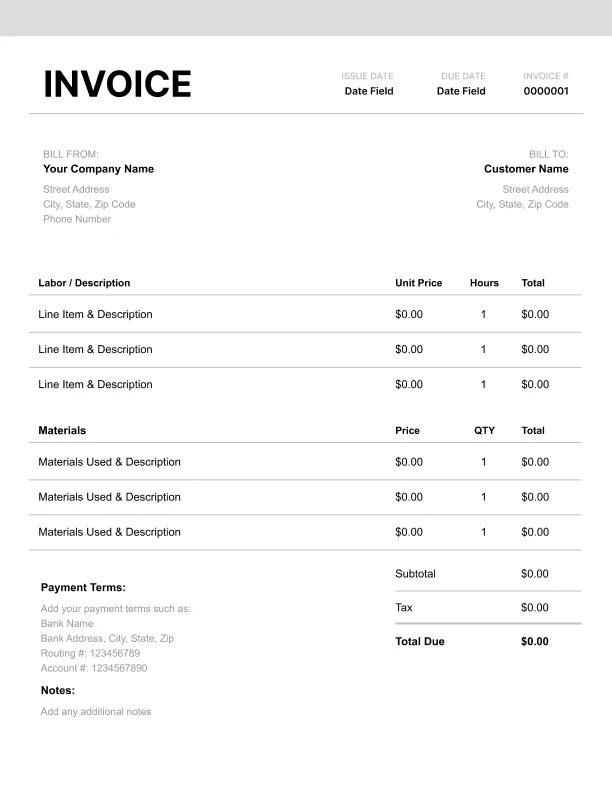
Classic Fencing Invoice Template
Timeless styling that works for any industry.
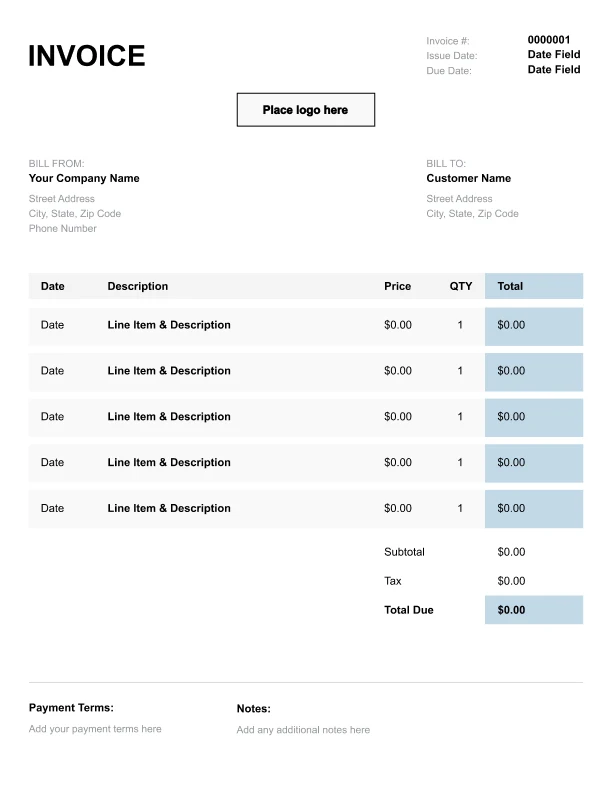
Simple Fencing Invoice Template
Easy to scan and perfect for quick billing.
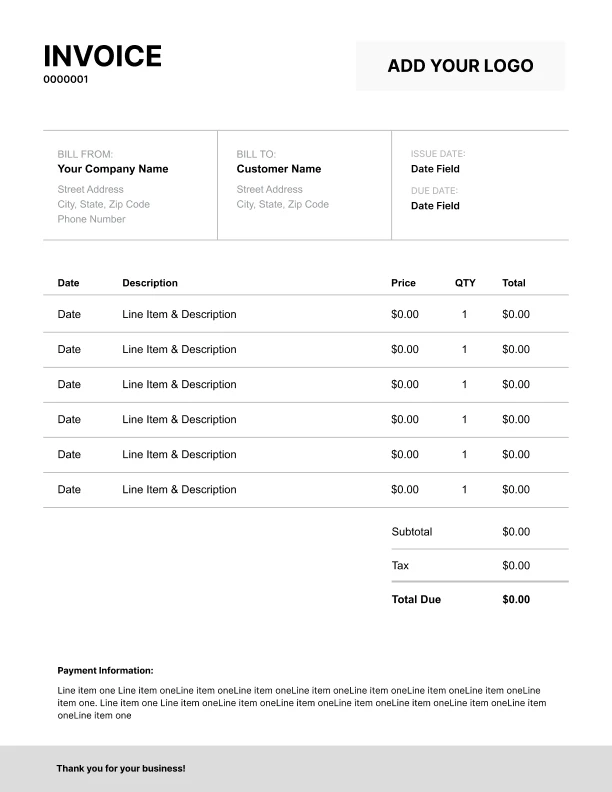
Detailed Fencing Invoice Template
Extra room for items, notes, and tax breakdowns.
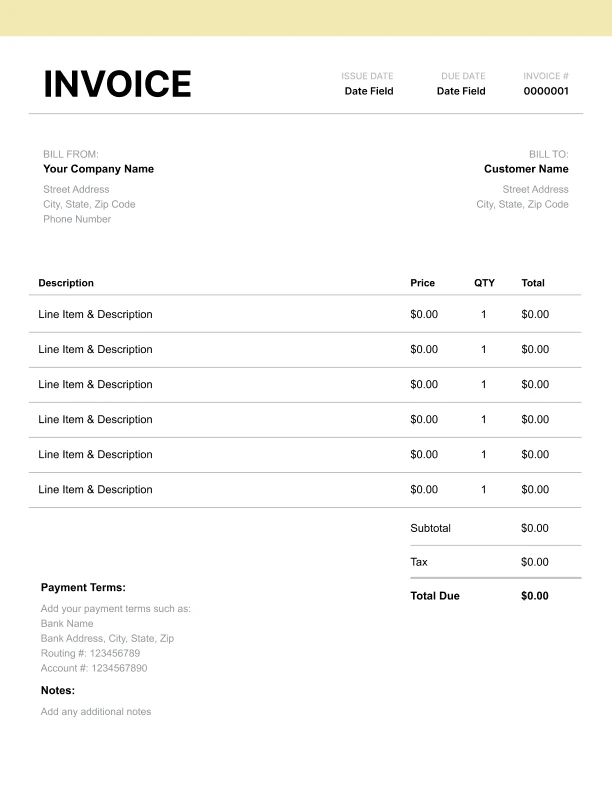
Modern Fencing Invoice Template
Clean sections with a subtle accent header.
Use Free Fencing Invoice Generator
Prefer a polished, client-ready invoice fast? The generator auto-calculates totals, applies taxes and discounts, and lets you customize your logo and colors.
Fencing Invoice Generator
What to Include on a Fencing Invoice
Fencing invoices should document the fence type, measurements, and the scope of installation or repair work.
Job details- Job address
- Fence type (wood, vinyl, chain link, metal)
- Total linear feet (optional)
- Gate count (optional)
- Installation labor (hours)
- Materials (posts, panels, pickets, hardware)
- Linear-foot installation pricing (when used)
- Gate installation
- Fence repairs
- Removal and haul-away
- Subtotal, sales tax, total due
- Payment terms and instructions
Fence Pricing Models: Linear Foot vs Project Pricing
Fencing contractors typically invoice using one of these approaches.
1) Linear foot pricing
Best when the scope is primarily the fence run. Invoice shows linear feet × rate, plus gates and add-ons.
2) Project-based pricing
A single materials line item plus labor line item (or a packaged project fee).
3) Repairs
Flat repair fees are common for damaged sections or post replacement.
Including linear footage as a custom field helps clients understand how measurements map to the invoice.
Itemizing Fence Materials and Add-Ons
Fence projects include significant materials and upgrades.
Common material-related items- Posts and concrete
- Panels/pickets/rails
- Hardware and fasteners
- Gates and latches
- Stain/seal (when applicable)
Scope, Site Conditions, and Changes
Fence installations can change based on site conditions.
Invoice-friendly best practices- Note that final measurements may adjust
- Clarify that additional gates or removal is billed separately
- Include job address and fence type prominently