Farm Invoice Template
Create professional farm invoices for produce, eggs, hay, feed, and wholesale agricultural sales. This farm invoice template supports unit-based quantities (crates, bales, dozens), delivery charges, and buyer references—ideal for farmers selling to markets, restaurants, and wholesale buyers. Download instantly in PDF, Word, or Excel format.
Download Popular Farm Invoice Templates
Download a ready-to-use PDF template or generate your invoice online in seconds.
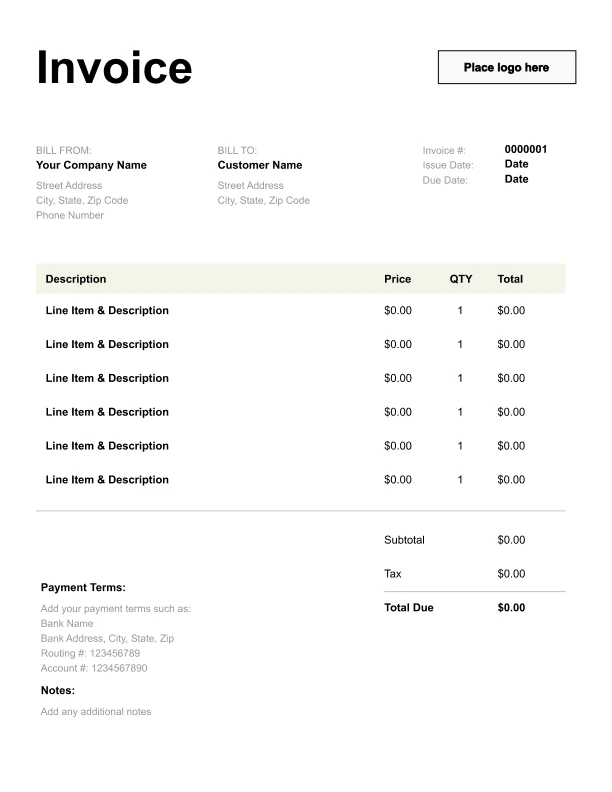
Clean Farm Invoice Template
A simple, versatile layout for services or products.
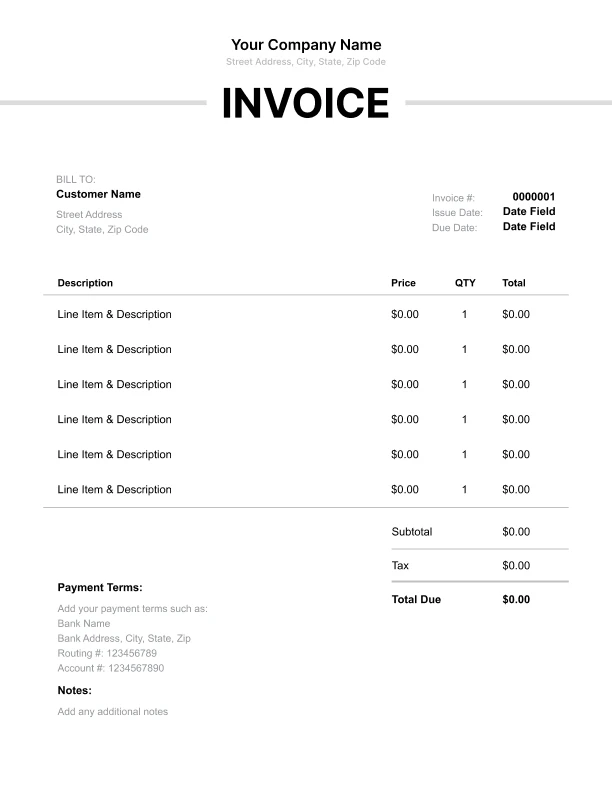
Minimal Farm Invoice Template
Lightweight design that keeps focus on line items.
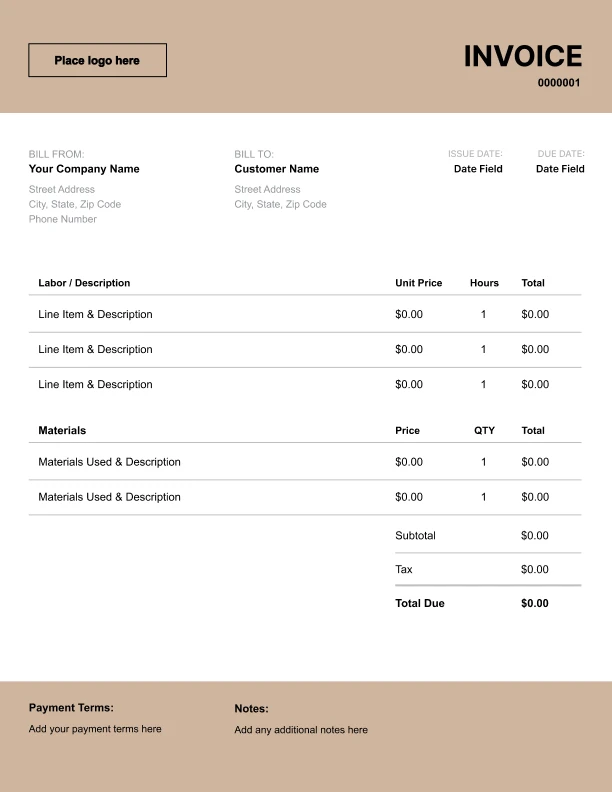
Bold Farm Invoice Template
Strong structure for large projects or milestones.
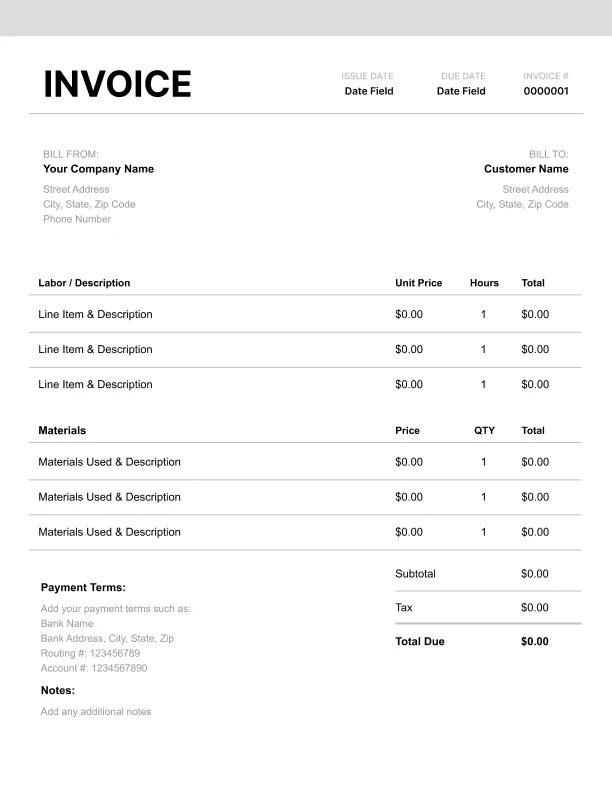
Classic Farm Invoice Template
Timeless styling that works for any industry.
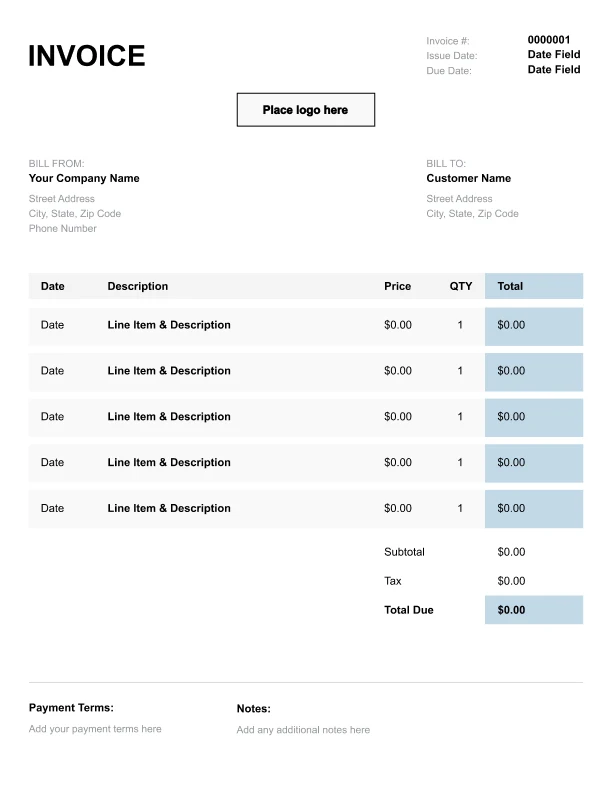
Simple Farm Invoice Template
Easy to scan and perfect for quick billing.
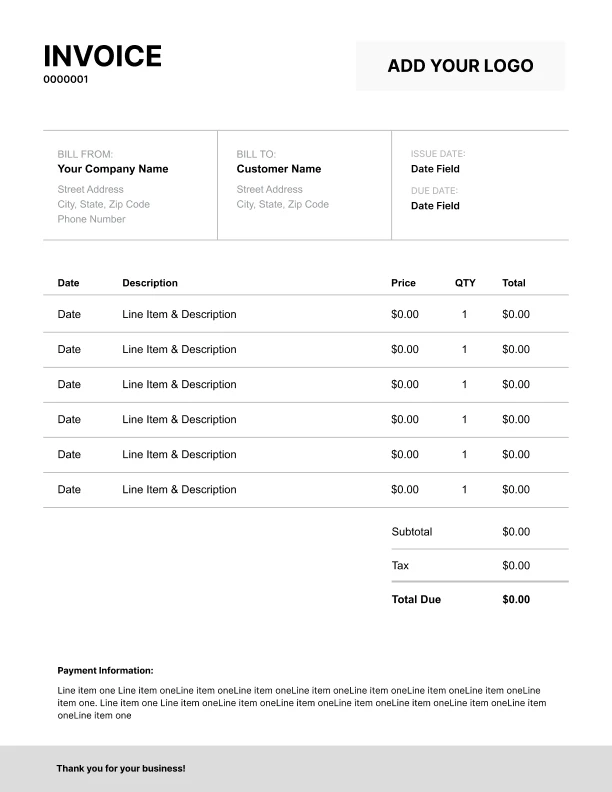
Detailed Farm Invoice Template
Extra room for items, notes, and tax breakdowns.
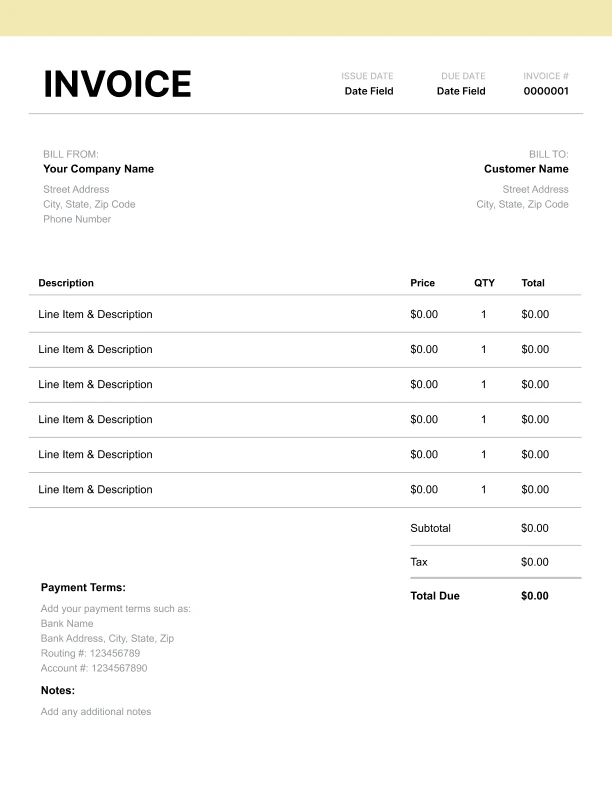
Modern Farm Invoice Template
Clean sections with a subtle accent header.
Use Free Farm Invoice Generator
Prefer a polished, client-ready invoice fast? The generator auto-calculates totals, applies taxes and discounts, and lets you customize your logo and colors.
Farm Invoice Generator
What to Include on a Farm Invoice
Farm invoices should be straightforward and easy to reconcile for wholesale buyers, markets, and restaurants.
Seller and buyer details- Farm name and contact info
- Buyer name/company and billing contact
- Buyer reference or PO number (common for wholesale)
- Delivery or pickup date
- Product category (produce, hay, livestock, etc.)
- Optional lot/batch information (helpful for traceability)
- Produce by unit (crate, box, bunch)
- Eggs by dozen
- Hay by bale
- Feed/grain by bag or weight
- Livestock sales (per head)
- Delivery fee (if applicable)
- Subtotal, sales tax, total due
- Payment terms
Common Farm Units to Use on Invoices
Using consistent units makes farm invoices easy to verify.
Common units- Crate/box: produce (greens, tomatoes, peppers)
- Bunch: herbs and leafy greens
- Dozen: eggs
- Bale: hay
- Bag: feed or grain
- Pound/kg: bulk products
- Head: livestock
Wholesale Farm Invoices for Markets and Restaurants
Wholesale buyers often have internal purchasing processes.
Best practices- Include a buyer PO/reference number
- Use delivery/pickup dates for reconciliation
- Keep product names specific (variety, grade if relevant)
- Add delivery fees as separate line items
Perishable Goods: Inspection and Returns
Perishable goods can create disputes if expectations aren’t clear.
Common invoice term notes- “Inspect upon receipt”
- “Report issues within X hours”
- “Returns by agreement only”