Law Firm Invoice Template
Create professional law firm invoices with clear matter details, itemized time entries, hourly rates by role, retainers, and disbursements. This law firm invoice template is designed for legal practices that need accurate billing clients can review and approve quickly. Download instantly in PDF, Word, or Excel format.
Download Popular Law Firm Invoice Templates
Download a ready-to-use PDF template or generate your invoice online in seconds.
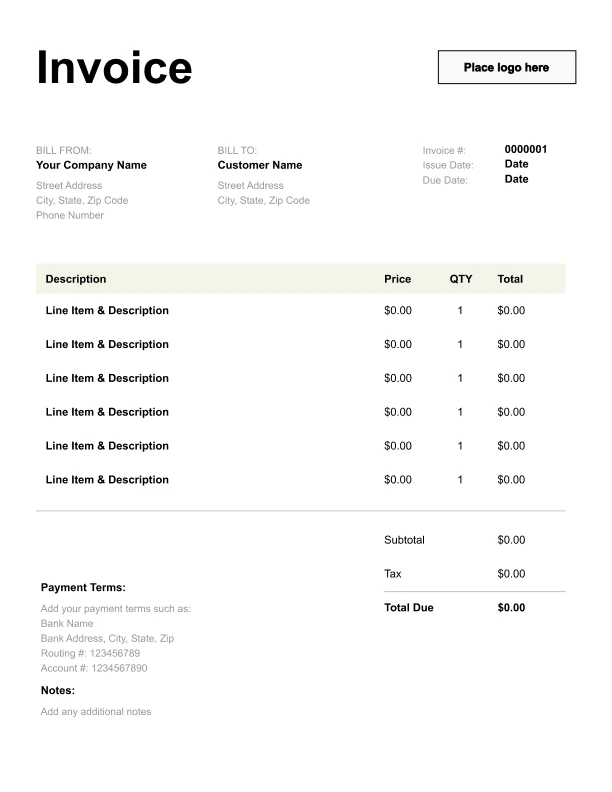
Clean Law Firm Invoice Template
A simple, versatile layout for services or products.
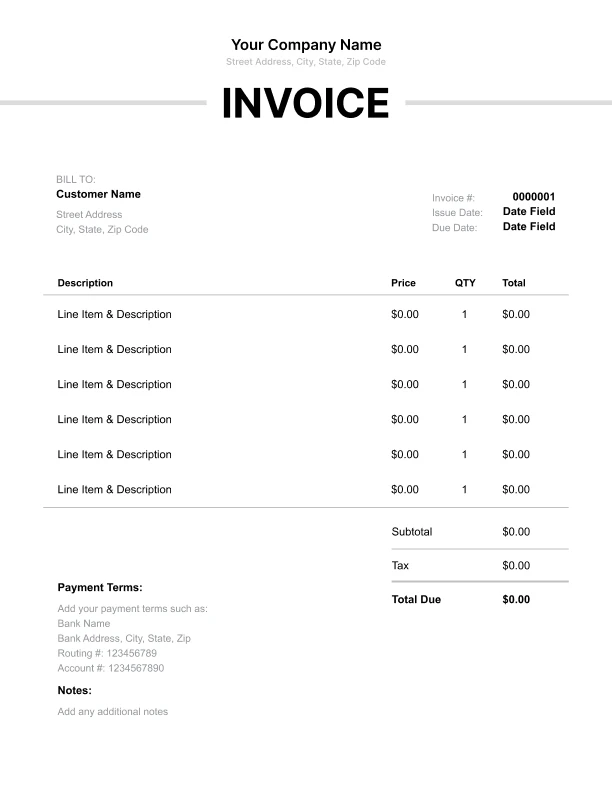
Minimal Law Firm Invoice Template
Lightweight design that keeps focus on line items.
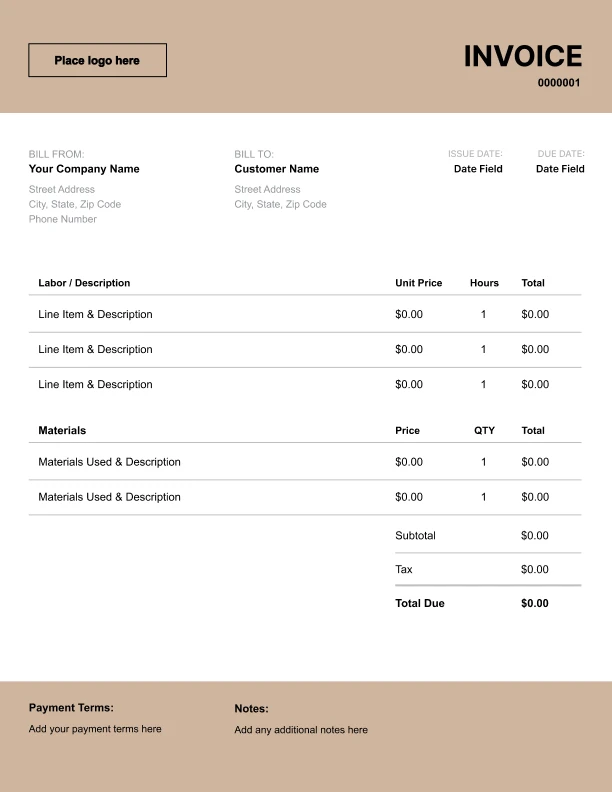
Bold Law Firm Invoice Template
Strong structure for large projects or milestones.
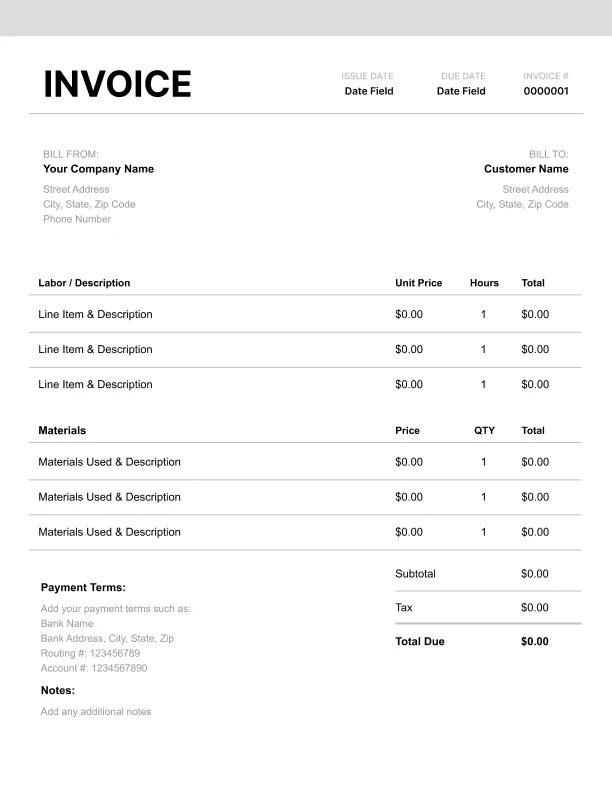
Classic Law Firm Invoice Template
Timeless styling that works for any industry.
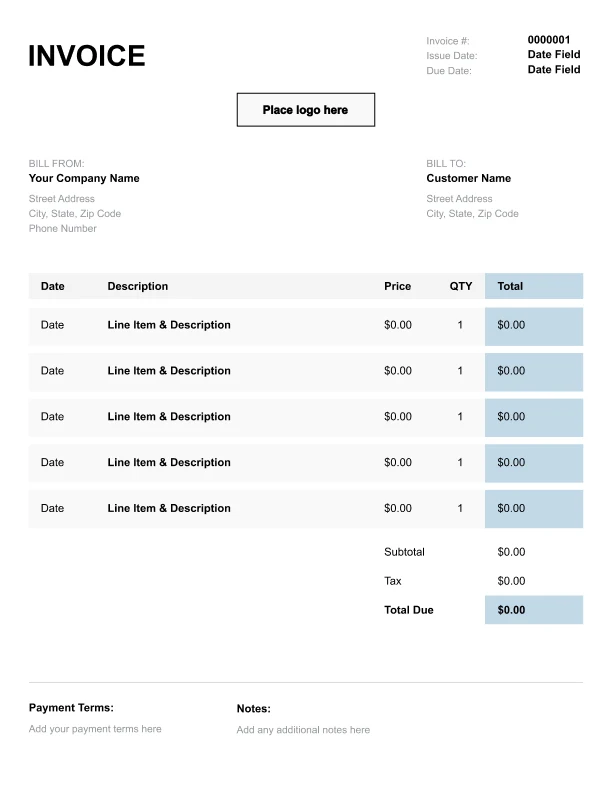
Simple Law Firm Invoice Template
Easy to scan and perfect for quick billing.
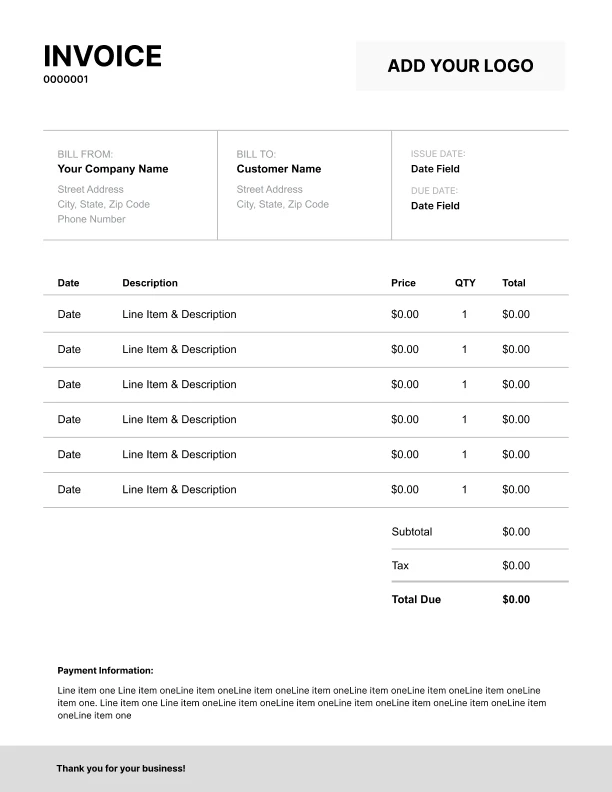
Detailed Law Firm Invoice Template
Extra room for items, notes, and tax breakdowns.
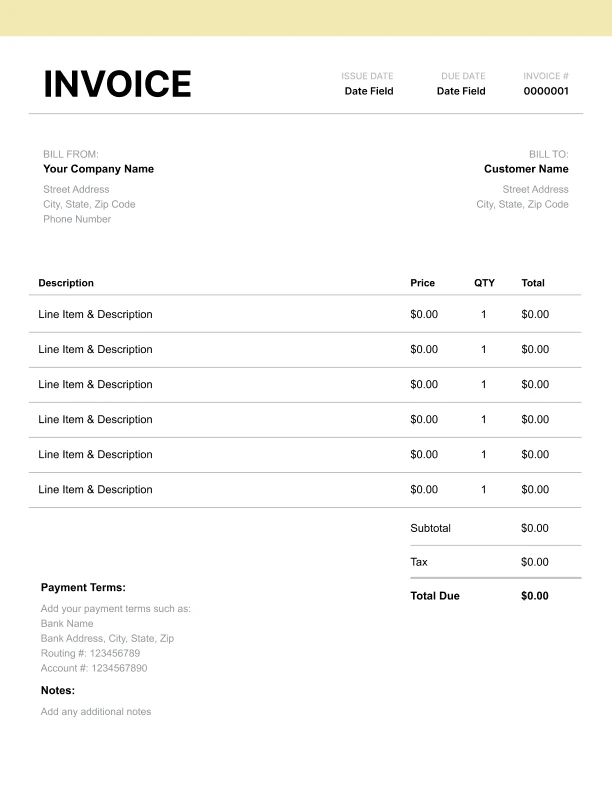
Modern Law Firm Invoice Template
Clean sections with a subtle accent header.
Use Free Law Firm Invoice Generator
Prefer a polished, client-ready invoice fast? The generator auto-calculates totals, applies taxes and discounts, and lets you customize your logo and colors.
Law Firm Invoice Generator
What to Include on a Law Firm Invoice
Law firm invoices often go through client review or accounts payable. A strong invoice makes it easy to understand who performed the work, what was done, and how fees were calculated.
Client and matter details- Client name and billing contact
- Matter/file name and number
- Responsible attorney
- Billing period (date range)
- Timekeeper role (partner, associate, paralegal)
- Task description
- Time spent (often in 0.1 hour increments)
- Hourly rate and line totals
- Court filing fees and clerk costs
- Process server/courier/postage
- Records/transcripts/copying
- Research charges (if billed)
- Retainer amount received (if applicable)
- Retainer applied as a credit line item
- Remaining balance due
- Subtotal, tax (if applicable), total due
- Payment terms and instructions
- Notes aligned with engagement agreement
Time Entries That Clients Approve Faster
Most billing pushback happens because time entries are too vague. Use descriptions that connect work to the matter and show value.
Clear time entry examples- “Review opposing counsel correspondence; summarize implications”
- “Legal research regarding contract termination; draft memo”
- “Draft and revise settlement agreement based on client feedback”
- “Prepare exhibits and organize filings for hearing”
- “Client call re: next steps and timeline”
- Keep entries focused on one task (avoid heavy block billing)
- Use consistent increments (e.g., 0.1 hour)
- Separate drafting, review, research, and communication
- Avoid overly sensitive detail that doesn’t belong on an invoice
Retainers, Trust Accounts, and How to Show Credits
Many law firms bill against a retainer. The invoice should make retainer use transparent.
How to show it- List fees and expenses as charges
- Add “Retainer Applied” as a negative line item (credit)
- Show the remaining amount due clearly
- Advance deposit held in trust and drawn down
- Evergreen retainer (minimum balance the client replenishes)
- Flat-fee matters with staged payments
Common Law Firm Disbursements to Itemize
Disbursements (third-party costs) are easier to approve when listed separately.
Typical disbursements- Court filing fees
- Process server fees
- Courier/postage
- Records requests and copying
- Transcripts/court reporter
- Research costs (where billed)
- Travel expenses (if allowed under engagement)