Itemized Bill Invoice Template
Create clear, detailed invoices with our itemized bill template. Perfect when clients need a line-by-line breakdown of charges, quantities, and rates—whether you’re billing for services, products, materials, or recurring work. Download instantly in PDF, Word, or Excel format.
Download Popular Itemized Bill Invoice Templates
Download a ready-to-use PDF template or generate your invoice online in seconds.
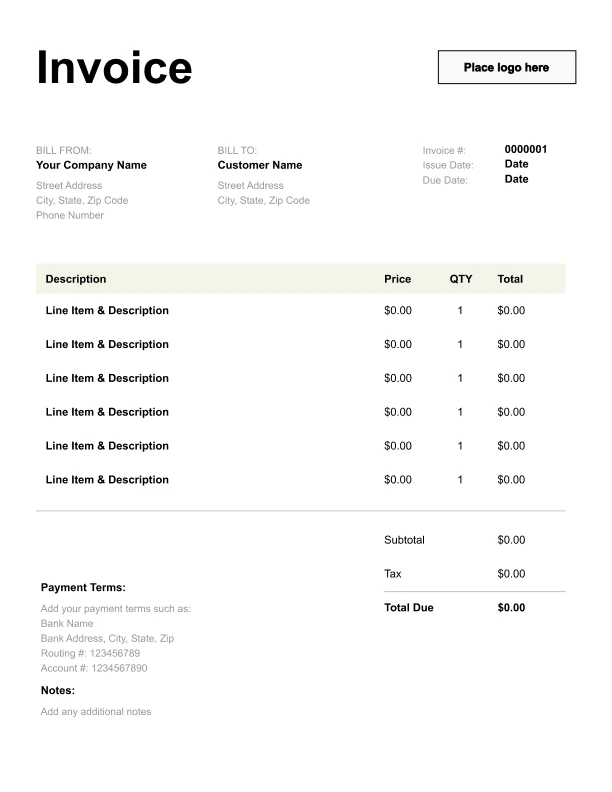
Clean Itemized Bill Invoice Template
A simple, versatile layout for services or products.
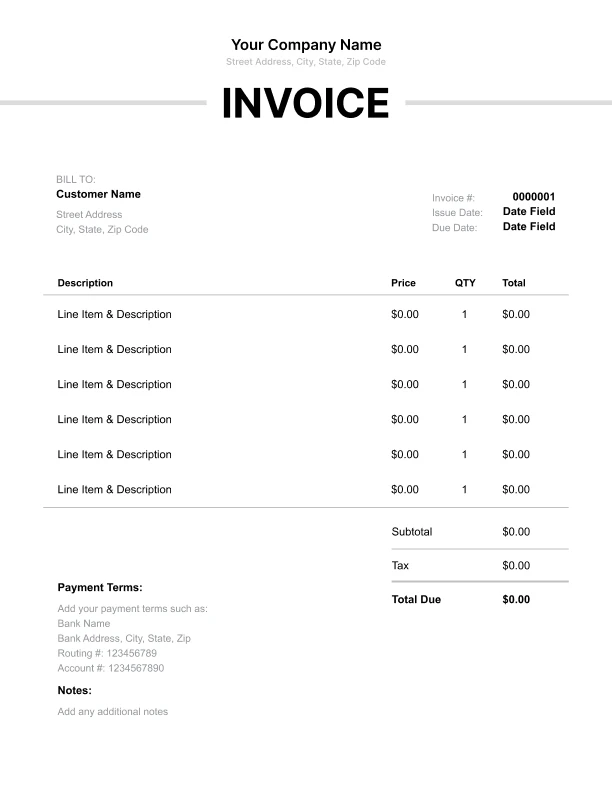
Minimal Itemized Bill Invoice Template
Lightweight design that keeps focus on line items.
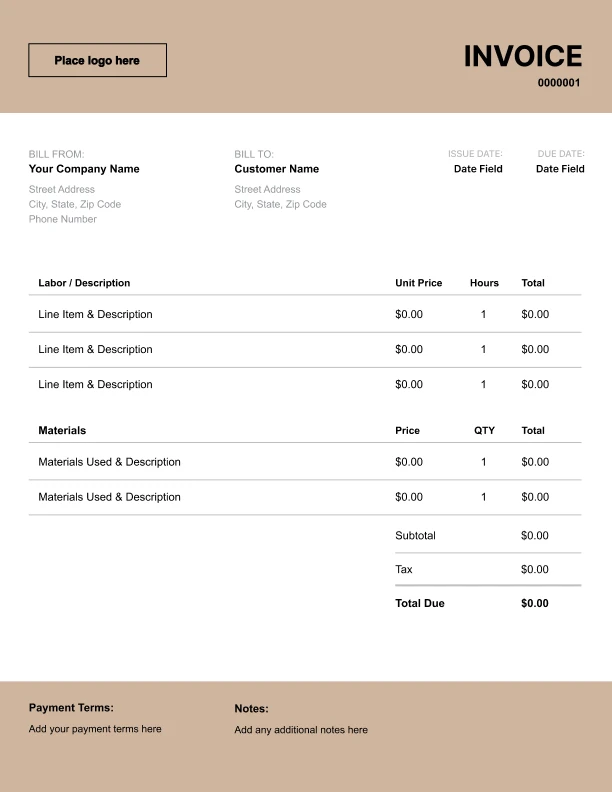
Bold Itemized Bill Invoice Template
Strong structure for large projects or milestones.
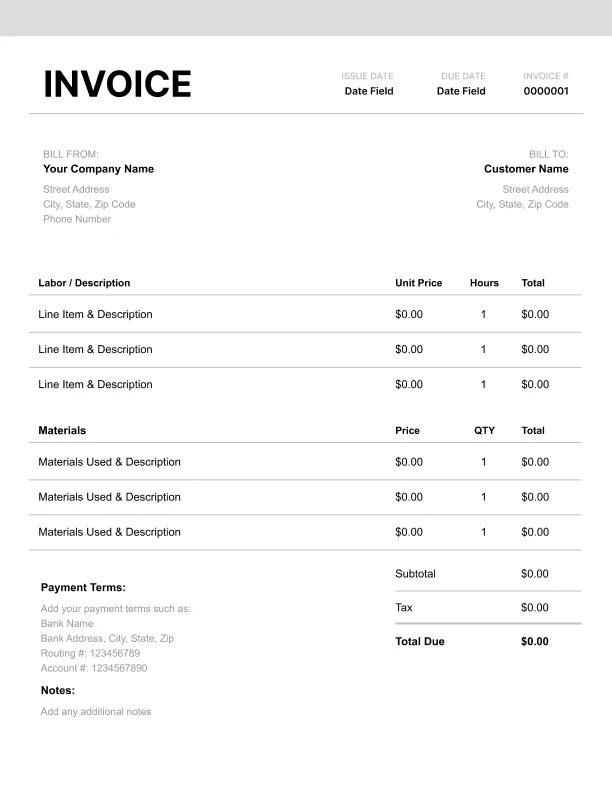
Classic Itemized Bill Invoice Template
Timeless styling that works for any industry.
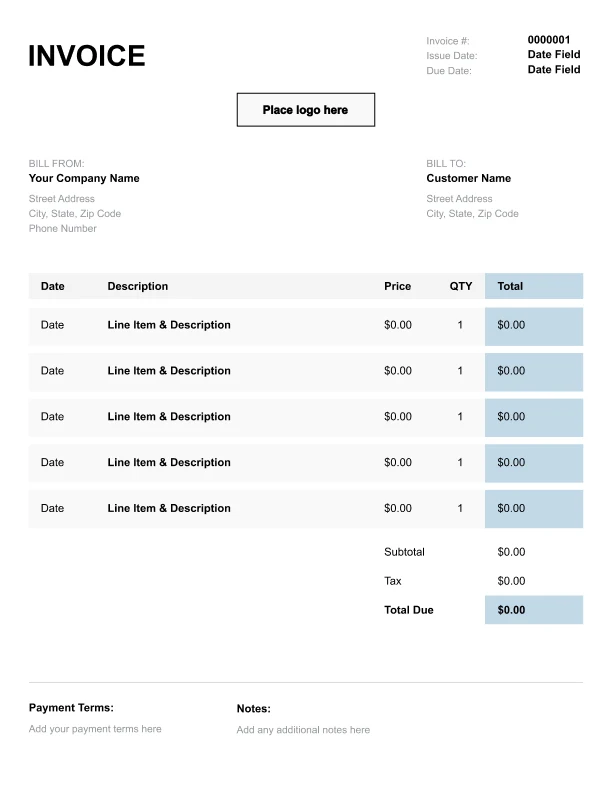
Simple Itemized Bill Invoice Template
Easy to scan and perfect for quick billing.
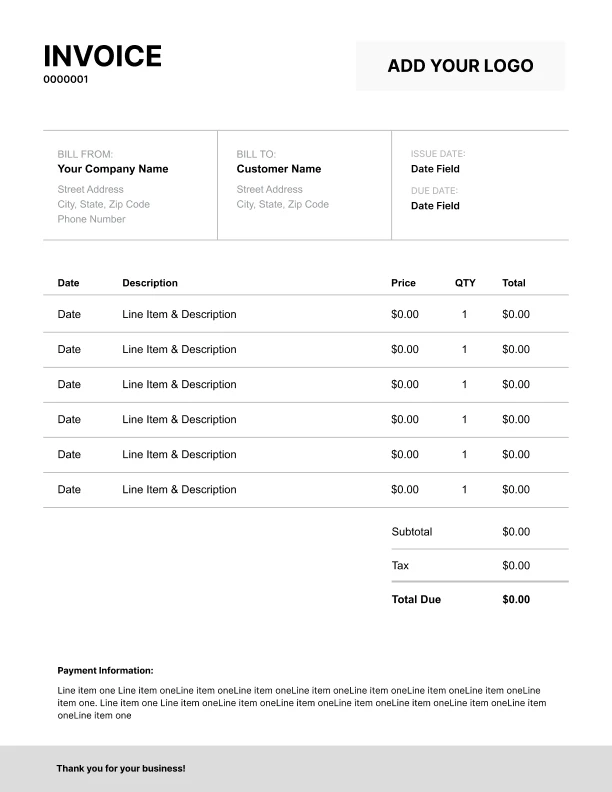
Detailed Itemized Bill Invoice Template
Extra room for items, notes, and tax breakdowns.
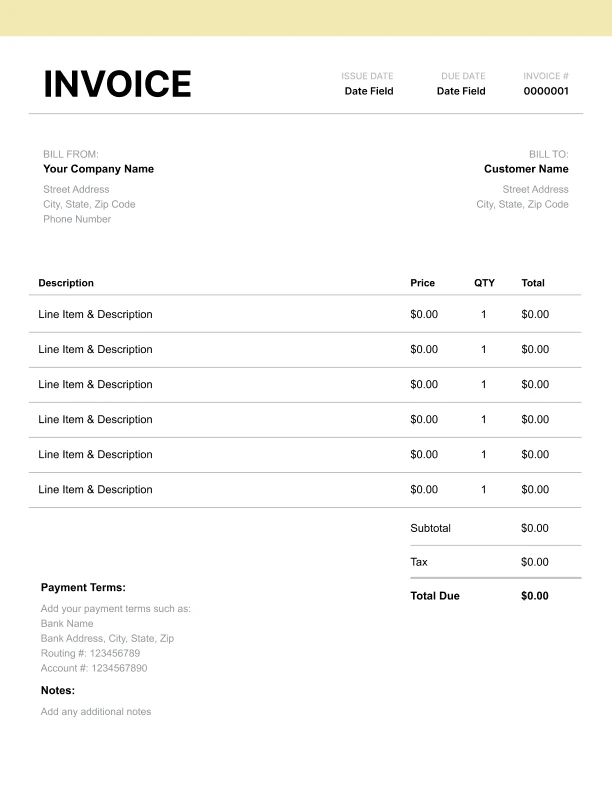
Modern Itemized Bill Invoice Template
Clean sections with a subtle accent header.
Use Free Itemized Bill Invoice Generator
Prefer a polished, client-ready invoice fast? The generator auto-calculates totals, applies taxes and discounts, and lets you customize your logo and colors.
Itemized Bill Invoice Generator
What Is an Itemized Bill?
An itemized bill is a bill or invoice that lists charges line by line instead of a single total. It helps customers understand exactly what they’re paying for and makes approvals faster—especially for business clients.
Itemized bills are common for- Service businesses billing labor + materials
- Professional services billed hourly
- Product orders with multiple items
- Projects with phases, milestones, or add-ons
- Any situation where the buyer needs documentation for accounting or reimbursement
What to Include on an Itemized Bill Template
A strong itemized bill template includes both standard invoice fields and a clear charge breakdown.
Standard details- Business name and contact information
- Client/customer details
- Invoice number and dates (if your system includes them)
- Payment terms and payment instructions
- Description of each item/service
- Quantity (hours, units, sessions)
- Rate (per hour/unit)
- Line total (quantity × rate)
- Optional discount line(s)
- Tax line (if applicable)
- Subtotal and total due
- Service period for recurring billing
- Reference/job number for tracking
- Notes that explain unusual charges
How to Write Itemized Line Items (So Clients Don’t Push Back)
Good itemization is about clarity. Match your line items to what the customer agreed to.
Examples (services)- “Labor — Installation (6 hours)”
- “Consulting — Monthly support (10 hours)”
- “Design — Landing page (wireframe + final)”
- “Product — Item Name / SKU (10 units)”
- “Packaging / Handling”
- “Shipping — Standard delivery”
- Avoid vague wording like “services rendered”
- Separate labor from materials
- Add a specific discount line instead of changing rates quietly
- Use consistent units and naming across invoices
When You Should Use an Itemized Bill Instead of a Simple Invoice
A simple invoice works when you have one flat fee. An itemized bill is better when the buyer needs detail.
Use itemized billing when- You charge hourly and need to show time-based value
- A job includes labor + materials/parts
- You offer add-ons (rush fee, travel, extra units)
- The client requires detailed documentation for approval
- You want to reduce disputes and chargebacks