Artist Invoice Template
Create professional invoices for artwork commissions and creative services with our artist invoice template. Built for commissions, murals, illustration, and artwork sales—complete with deposits, revisions, and usage rights. Download instantly in PDF, Word, or Excel format.
Download Popular Artist Invoice Templates
Download a ready-to-use PDF template or generate your invoice online in seconds.
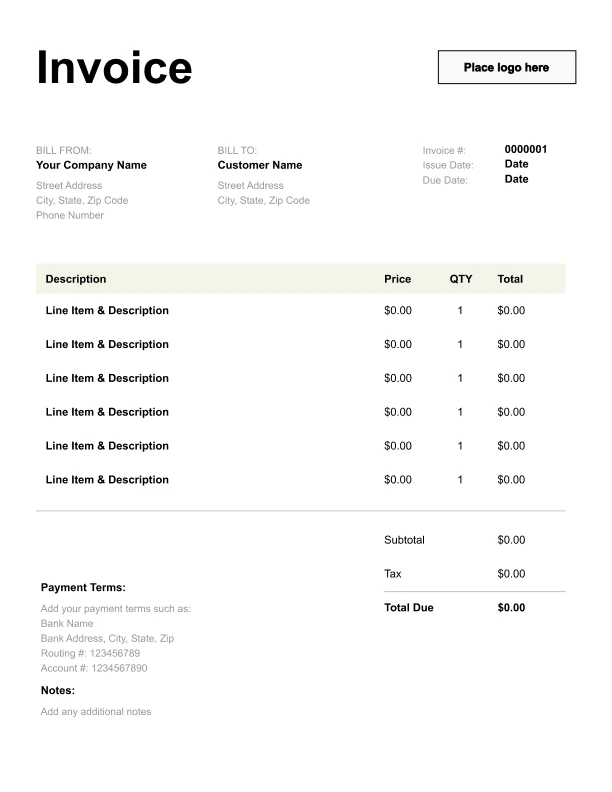
Clean Artist Invoice Template
A simple, versatile layout for services or products.
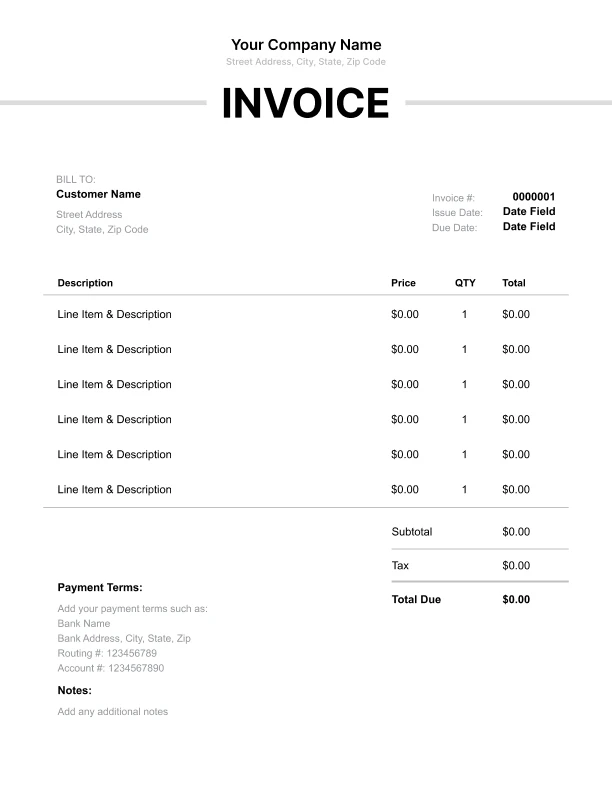
Minimal Artist Invoice Template
Lightweight design that keeps focus on line items.
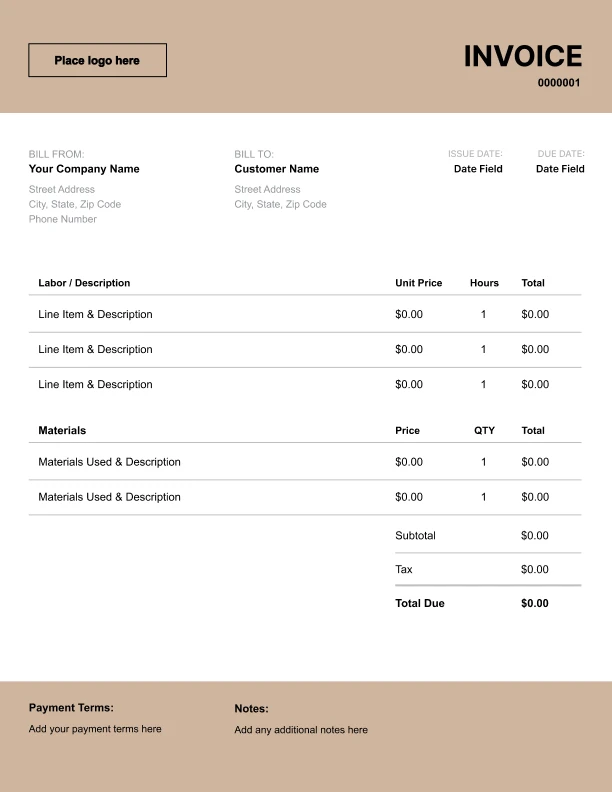
Bold Artist Invoice Template
Strong structure for large projects or milestones.
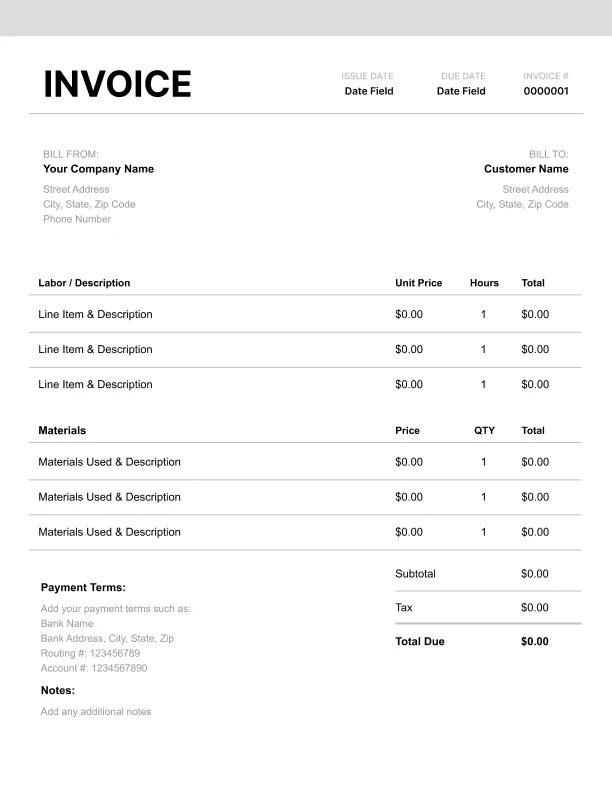
Classic Artist Invoice Template
Timeless styling that works for any industry.
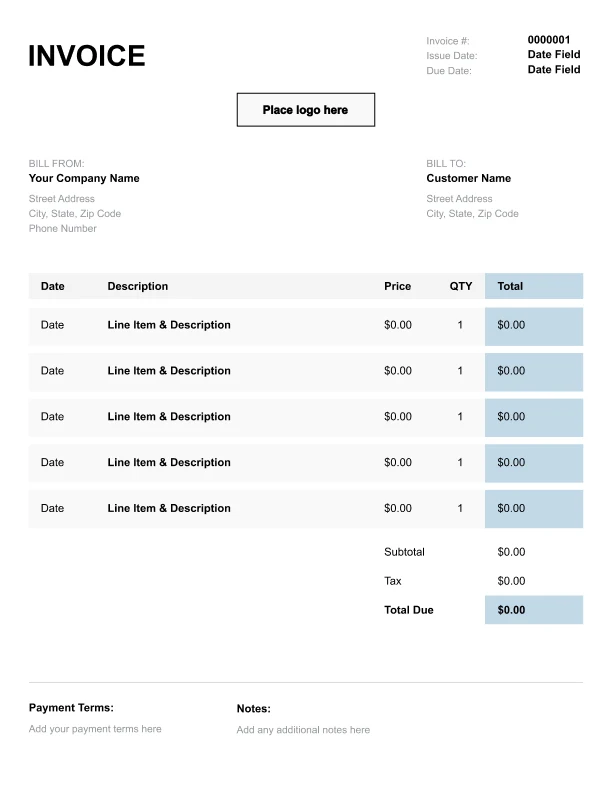
Simple Artist Invoice Template
Easy to scan and perfect for quick billing.
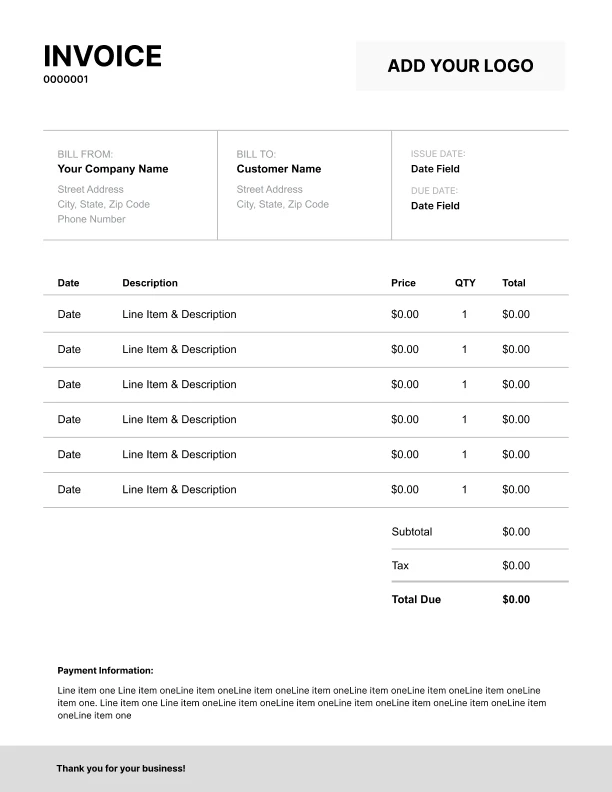
Detailed Artist Invoice Template
Extra room for items, notes, and tax breakdowns.
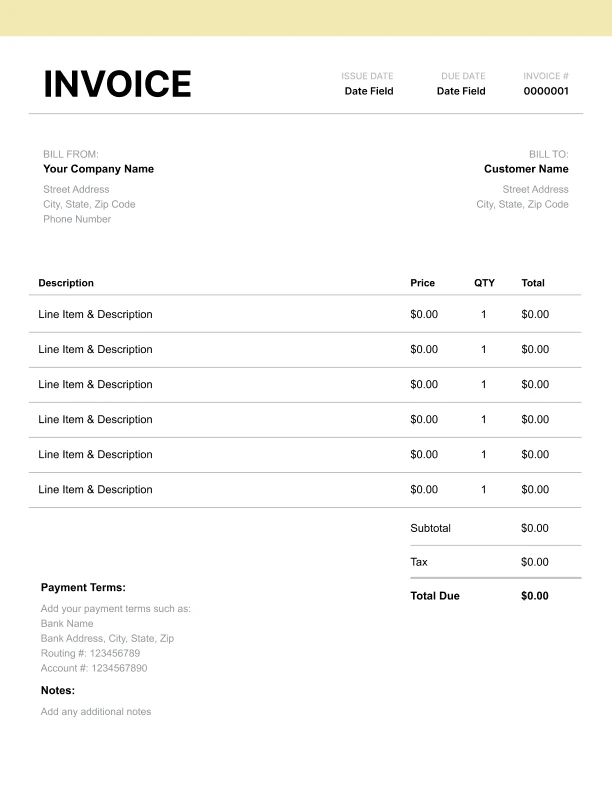
Modern Artist Invoice Template
Clean sections with a subtle accent header.
Use Free Artist Invoice Generator
Prefer a polished, client-ready invoice fast? The generator auto-calculates totals, applies taxes and discounts, and lets you customize your logo and colors.
Artist Invoice Generator
What to Include on an Artist Invoice
Artist invoices often need to document both the artwork and the rights the client is purchasing.
Artwork details- Commission title or description
- Medium (digital, oil, acrylic, watercolor, etc.)
- Size/dimensions
- Deliverables (original, print-ready file, source file, etc.)
- Timeline or milestone (optional)
- Commission/project fee
- Concept sketches (included vs. extra)
- Revisions (included vs. billed hourly)
- Licensing/usage fee (if commercial use)
- Printing, framing, shipping, installation (if applicable)
- Deposit requirement (often 30–50%)
- Deposit shown as a credit if already paid
- Remaining balance due before delivery/release
- Personal vs. commercial usage rights
- Whether the artist retains copyright
- Whether editable/source files are included
How Artists Price Commissions (Common Models)
Artists typically price commissions using one of these approaches:
1) Flat commission fee
A fixed price based on size, complexity, and medium. Most common for portraits and custom pieces.
2) Tiered packages
Different price tiers based on deliverables (e.g., single subject vs. multiple subjects, background complexity).
3) Hourly for revisions
Base fee covers the main work, then additional revisions are billed hourly.
4) Licensing-based pricing
For commercial clients, price may include a usage fee based on where the art will appear (web, packaging, advertising).
5) Milestone billing
Invoice deposits + installments tied to sketch approval, final draft, and delivery.
Pick a model and reflect it clearly in your line items so clients understand what’s included.
Usage Rights and Licensing for Artwork
Many misunderstandings come from assuming the client “owns” the art. Your invoice can clarify what rights are granted.
Common rights options- Personal use: display, personal prints, personal social posting
- Commercial use (limited): web/social for a brand, non-advertising
- Commercial use (broad): marketing, ads, packaging, print
- Exclusive vs non-exclusive: exclusive usage typically costs more
- Copyright transfer: rare; usually priced significantly higher
- Where the client can use the artwork (channels)
- Duration (perpetual vs time-limited)
- Whether the client can modify the artwork
- Credit requirements (if any)
Revisions, Approvals, and Protecting Your Time
Commissions usually involve approvals at key stages. Set expectations so the project stays on track.
Best practices- Include 1–2 revision rounds in the base price
- Bill additional revisions as hourly or per round
- Get approval on sketches before moving to final
- Make “scope changes” a separate line item