Solicitor Invoice Template
Create professional solicitor invoices for consultations, case work, and legal document services with clear matter references and disbursements. This solicitor invoice template supports hourly billing, fixed fees, retainers, and reimbursable costs—ideal for solicitors and legal practices handling client matters. Download instantly in PDF, Word, or Excel format.
Download Popular Solicitor Invoice Templates
Download a ready-to-use PDF template or generate your invoice online in seconds.
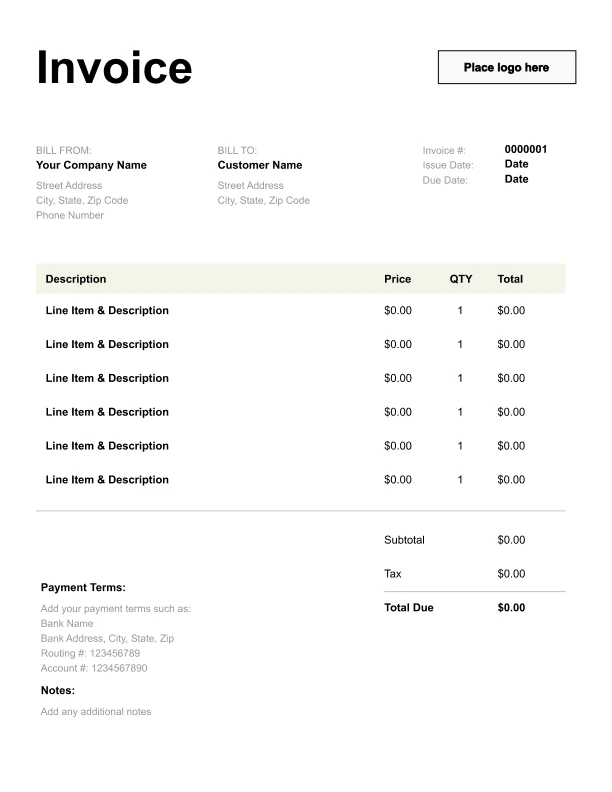
Clean Solicitor Invoice Template
A simple, versatile layout for services or products.
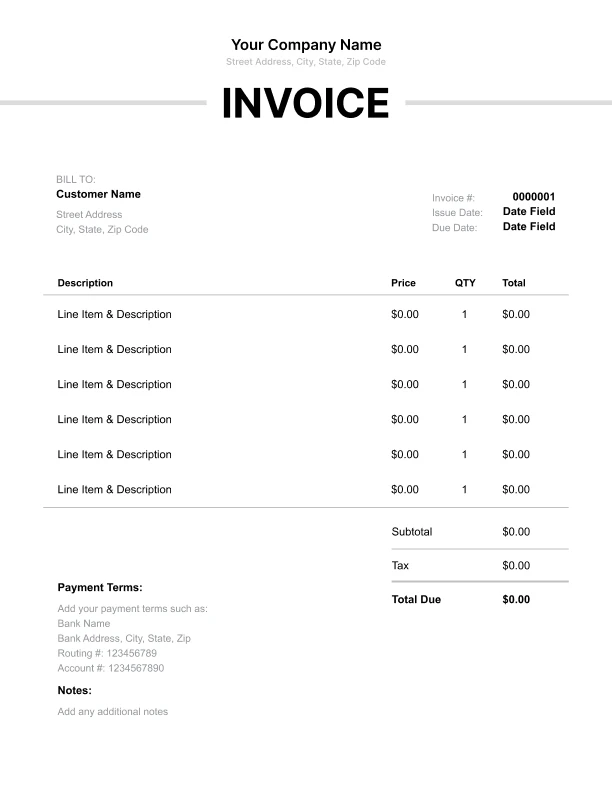
Minimal Solicitor Invoice Template
Lightweight design that keeps focus on line items.
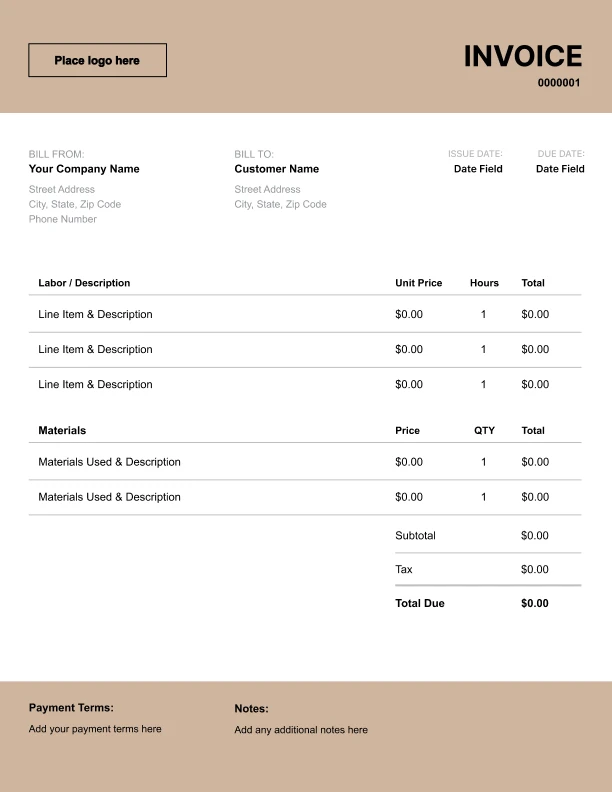
Bold Solicitor Invoice Template
Strong structure for large projects or milestones.
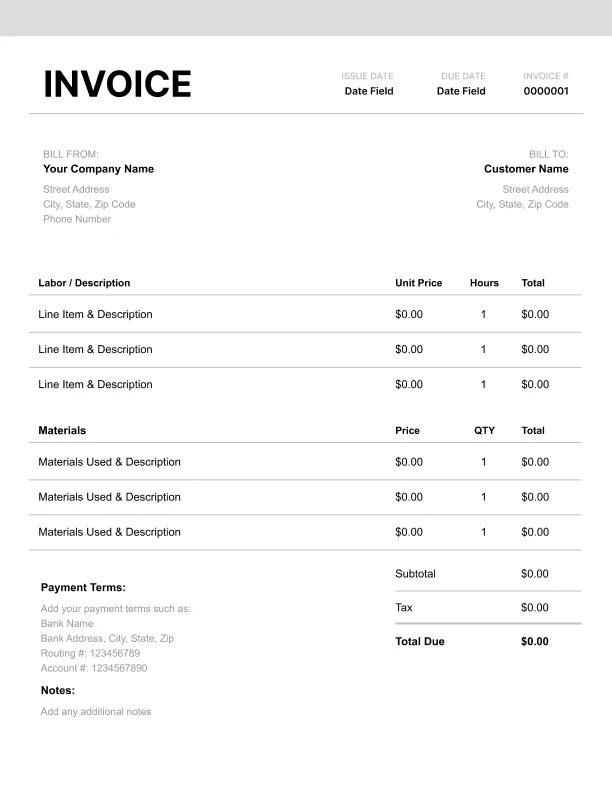
Classic Solicitor Invoice Template
Timeless styling that works for any industry.
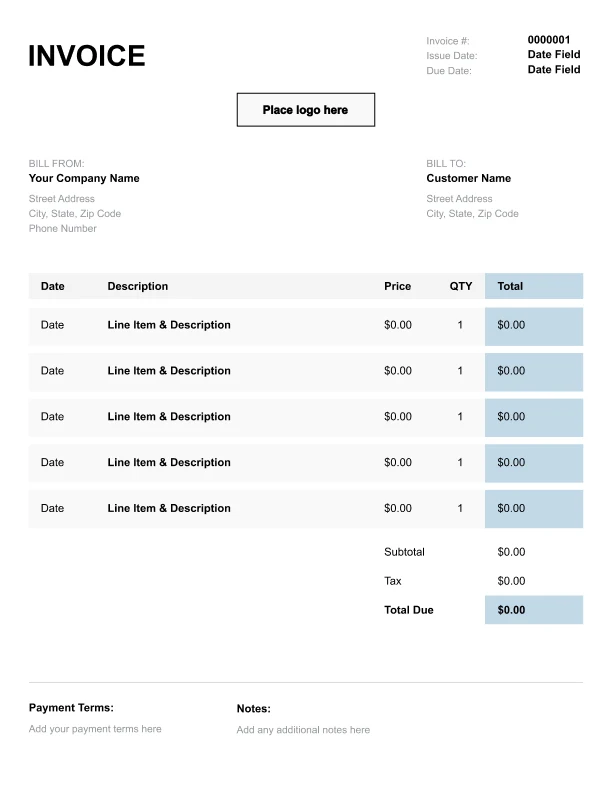
Simple Solicitor Invoice Template
Easy to scan and perfect for quick billing.
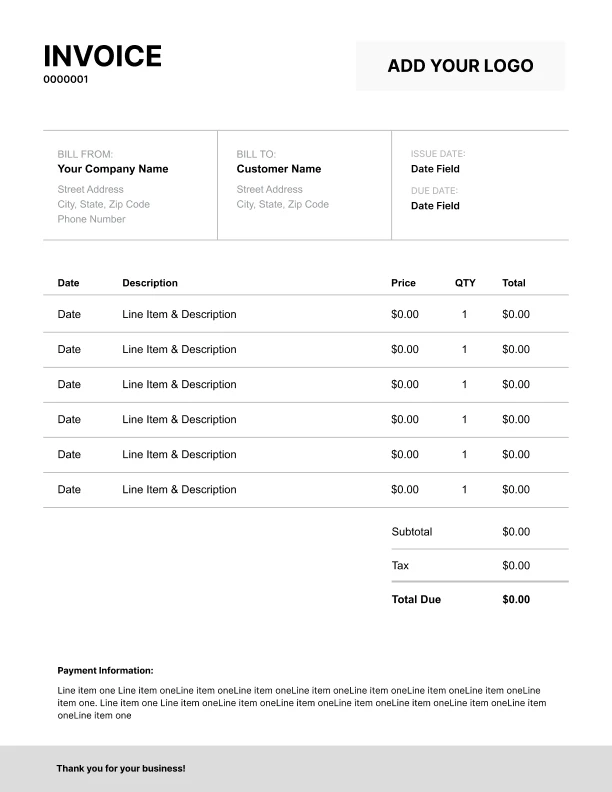
Detailed Solicitor Invoice Template
Extra room for items, notes, and tax breakdowns.
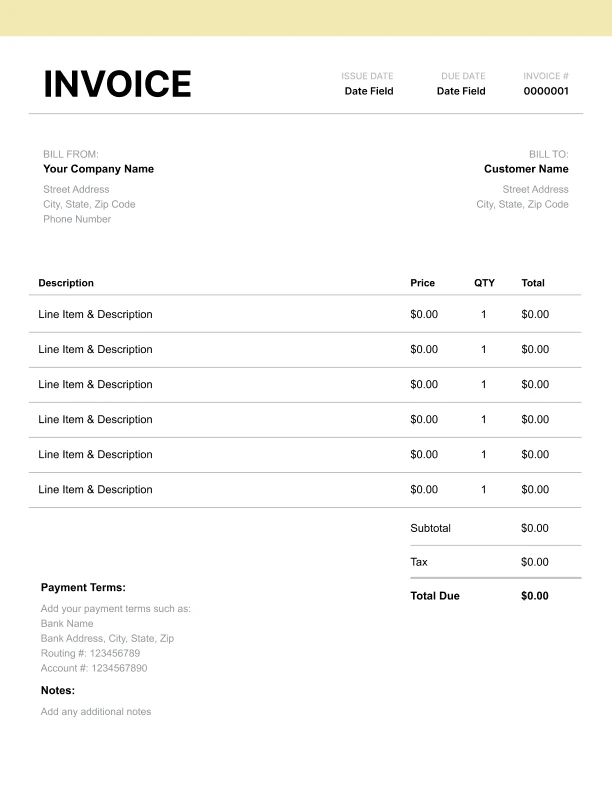
Modern Solicitor Invoice Template
Clean sections with a subtle accent header.
Use Free Solicitor Invoice Generator
Prefer a polished, client-ready invoice fast? The generator auto-calculates totals, applies taxes and discounts, and lets you customize your logo and colors.
Solicitor Invoice Generator
What to Include on a Solicitor Invoice
Solicitor invoices should make it easy for clients to understand what work was performed on a specific matter and what costs are disbursements.
Client and matter details- Client name and billing contact
- Matter/case reference (critical)
- Client type (individual or business)
- Service period (week/month/date range)
- Consultation time
- Case work/advisory time
- Document drafting and review
- Court/hearing attendance (if applicable)
- Court/filing/registry fees
- Courier/postage
- Third-party services (where applicable)
- Retainer payments shown as credits
- Adjustments or write-offs (if applicable)
- Subtotal, tax (if applicable), total due
- Payment terms and instructions
Solicitor Billing Models: Hourly, Fixed Fee, and Retainers
Legal services are often billed using one of these approaches:
1) Hourly billing
Common for advisory and ongoing case work. Invoices show hours × rate.
2) Fixed fee
Used for defined services (standard contracts, filings, simple matters). Invoice shows a fixed line item with clear scope.
3) Retainer
Client pays funds in advance. Invoices apply fees against the retainer and show the retainer as a credit.
Including a “Fee basis” field helps clients understand how charges are calculated and reduces follow-up questions.
Disbursements vs Legal Fees (Keep Them Separate)
Clients often want to know which charges are professional fees and which are third-party costs.
Legal fees- Solicitor time and expertise (consultation, drafting, representation)
- Fees paid to others (court filing, registry, courier, searches)
Itemized Time Statements and Descriptions
Some clients require an itemized breakdown of tasks for approval.
Invoice-friendly approach- Use clear line item descriptions (“Document review — contract amendments”)
- Include a service period to match internal records
- Provide a detailed time statement upon request (separate document)