Accountant Invoice Template
Create professional accounting invoices for tax preparation, bookkeeping, auditing, and financial consulting services. Our template includes service categorization, hourly and fixed-fee billing options, and tax year tracking. Perfect for CPAs, bookkeepers, and accounting firms. Download instantly in PDF, Word, or Excel format.
Download Popular Accountant Invoice Templates
Download a ready-to-use PDF template or generate your invoice online in seconds.
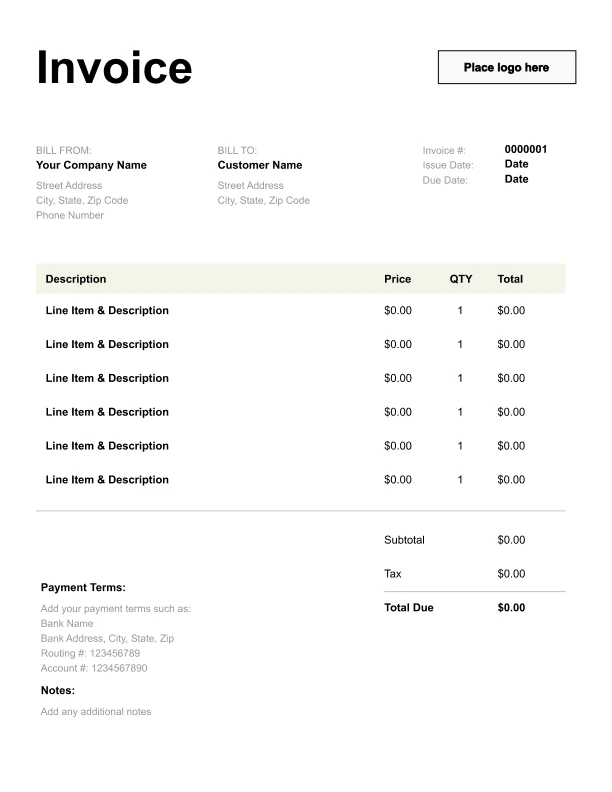
Clean Accountant Invoice Template
A simple, versatile layout for services or products.
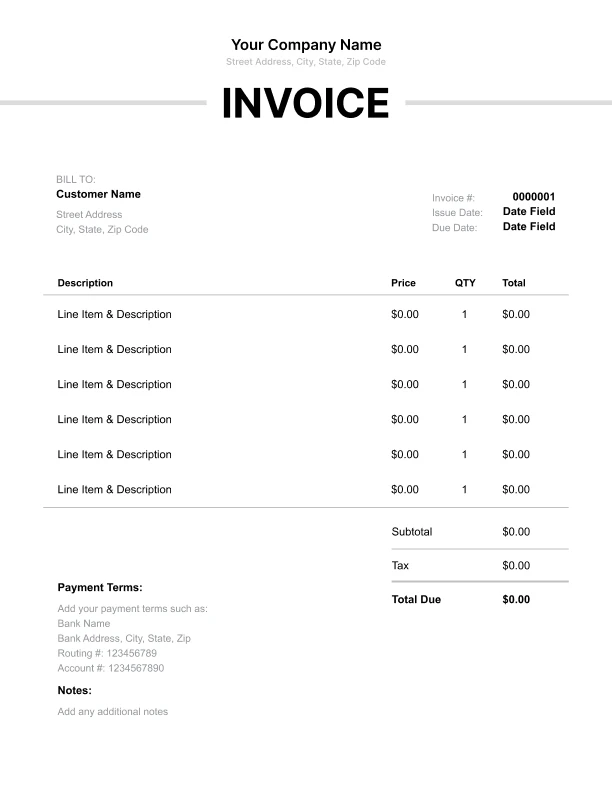
Minimal Accountant Invoice Template
Lightweight design that keeps focus on line items.
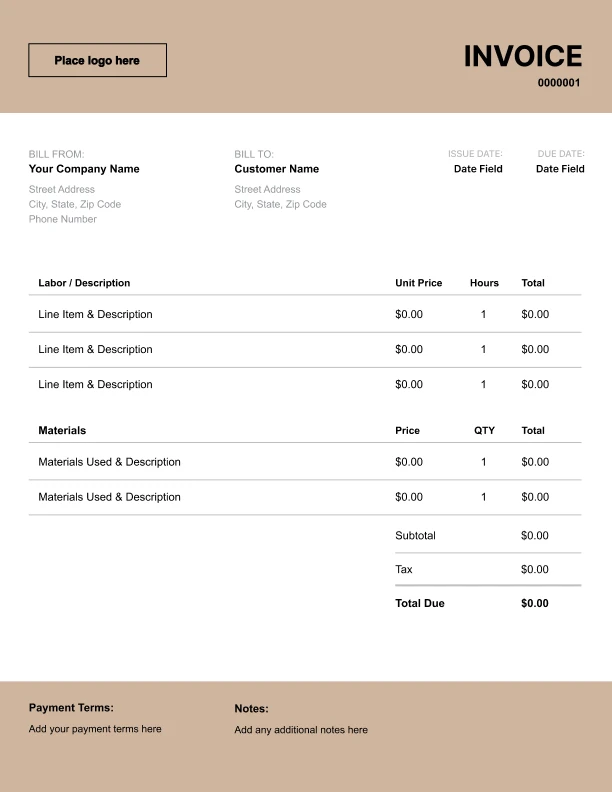
Bold Accountant Invoice Template
Strong structure for large projects or milestones.
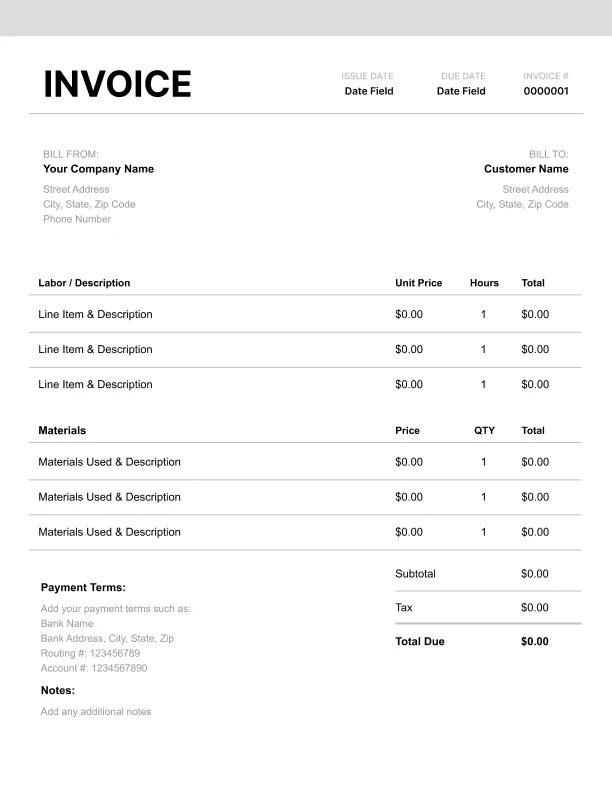
Classic Accountant Invoice Template
Timeless styling that works for any industry.
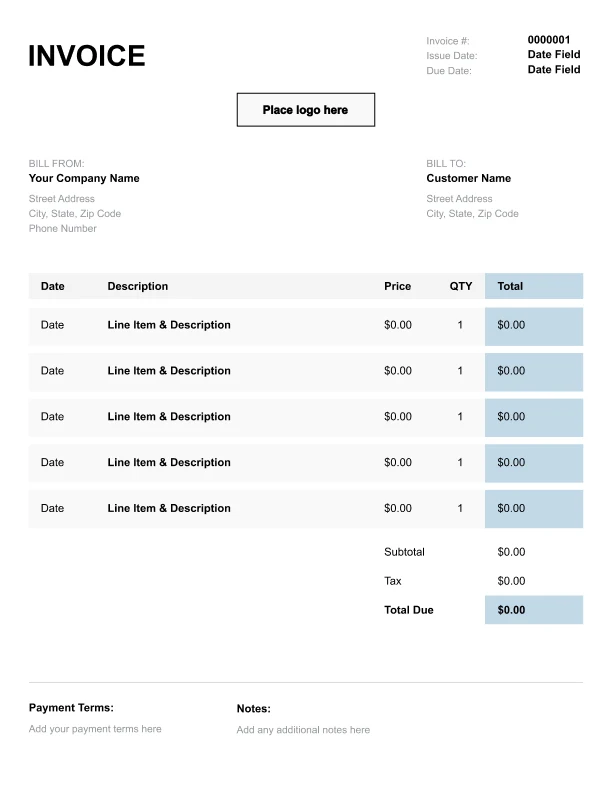
Simple Accountant Invoice Template
Easy to scan and perfect for quick billing.
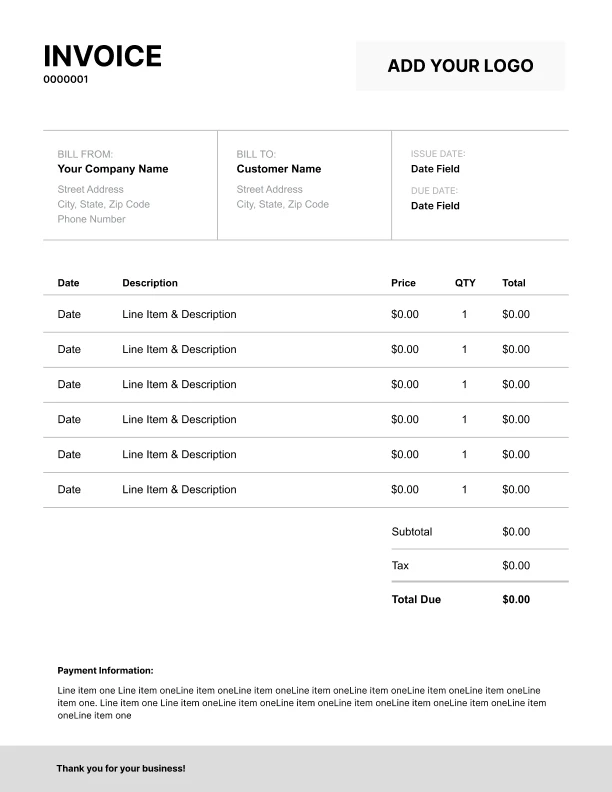
Detailed Accountant Invoice Template
Extra room for items, notes, and tax breakdowns.
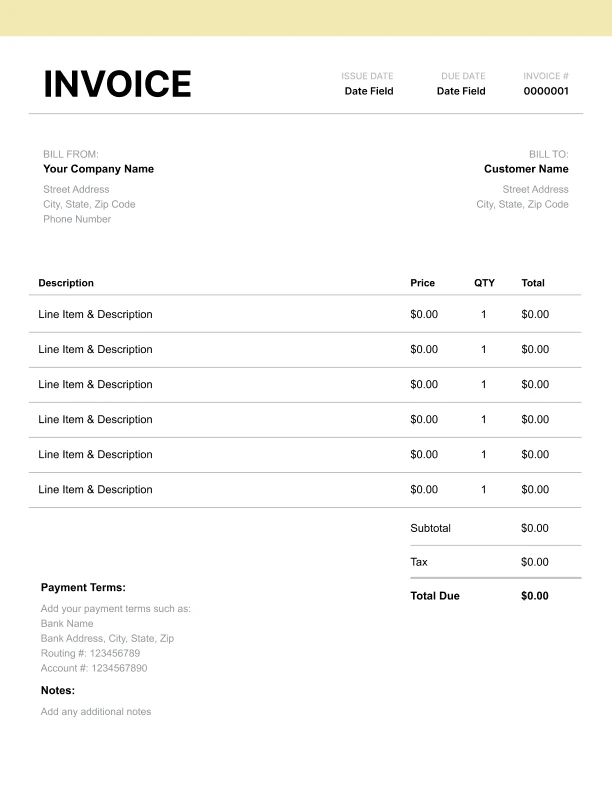
Modern Accountant Invoice Template
Clean sections with a subtle accent header.
Use Free Accountant Invoice Generator
Prefer a polished, client-ready invoice fast? The generator auto-calculates totals, applies taxes and discounts, and lets you customize your logo and colors.
Accountant Invoice Generator
What to Include on an Accounting Invoice
Professional accounting invoices should document:
Firm Information- Firm name and address
- CPA license number(s)
- Tax ID/EIN
- Contact information
- Professional memberships
- Client name (individual or business)
- Business entity type
- Tax ID/EIN (if applicable)
- Billing address
- Client account number
- Service period or tax year
- Type of service rendered
- Description of work completed
- Hours spent (if hourly)
- Staff members involved
- Tax preparation services
- Bookkeeping services
- Payroll processing
- Financial consulting
- Audit or review services
- Advisory services
- Professional fees
- Filing fees (reimbursable)
- Software/technology fees
- Travel expenses (if any)
- Rush or expedite charges
- Subtotal by service category
- Discounts applied
- Prior balance
- Payments received
- Amount due
Accounting Billing Methods
Accountants use various billing structures:
Hourly Billing
Track time spent on client work. Bill in increments (usually 15 minutes). Different rates for partners, CPAs, and staff. Best for consulting and variable work.
Fixed Fee
Set price for specific services (tax return, monthly bookkeeping). Quote upfront based on complexity. Provides client cost certainty.
Value Pricing
Price based on value delivered rather than time spent. Higher fees for complex planning that saves client money. Requires clear value demonstration.
Retainer/Monthly
Fixed monthly fee for ongoing services. Common for bookkeeping clients. Provides predictable revenue and client budgeting.
Project-Based
Flat fee for defined projects (audit, system implementation). Requires clear scope definition. Risk of scope creep.
Hybrid Approach
Combine methods: fixed fee for routine work (tax return) plus hourly for additional questions or planning.
Accounting Rate Benchmarks
Industry standard rates for accounting services:
Hourly Rates- Staff accountant: $50-100/hr
- Senior accountant: $75-150/hr
- CPA (non-partner): $125-250/hr
- CPA Partner: $200-400+/hr
- Bookkeeper: $40-80/hr
- Enrolled Agent: $100-200/hr
- Simple return (1040 only): $150-300
- Itemized deductions: $200-400
- Self-employment: $300-500
- Rental property: +$100-200 each
- Stock transactions: +$50-150
- Complex returns: $500-1,500+
- Sole proprietor (Sch C): $250-500
- Partnership (1065): $500-1,500
- S-Corp (1120S): $750-2,000
- C-Corp (1120): $1,000-3,000+
- Multi-state: +$200-500/state
- Basic (under 50 transactions): $200-400
- Standard (50-200 transactions): $400-800
- Complex (200+ transactions): $800-1,500+
- Payroll add-on: $50-150/month
- QuickBooks setup: $500-1,500
- Financial statements: $300-1,000
- Audit preparation: $1,500-5,000
- CFO services: $1,000-3,000/month
- IRS representation: $150-350/hr
Accounting Client Billing Best Practices
Manage client relationships through professional billing:
Engagement Letters- Required for all clients
- Define scope of services
- State fee structure clearly
- Include payment terms
- Outline client responsibilities
- Set clear deadlines
- Charge for late documents
- Track what's received
- Follow up systematically
- Tax prep: bill before filing
- Monthly services: bill on 1st
- Projects: milestone billing
- Consulting: bill monthly or at completion
- Require deposit from new clients
- Accept multiple payment methods
- Offer payment plans for large fees
- Hold returns until paid (where legal)
- Explain complex fees
- Itemize services clearly
- Respond to billing questions promptly
- Annual engagement review