Trucking Invoice Template
Create professional trucking invoices with the load details carriers and brokers need: load number, BOL, pickup and delivery lanes, fuel surcharge, and accessorial charges like detention and lumper fees. Ideal for owner-operators and trucking companies. Download instantly in PDF, Word, or Excel format.
Download Popular Trucking Invoice Templates
Download a ready-to-use PDF template or generate your invoice online in seconds.
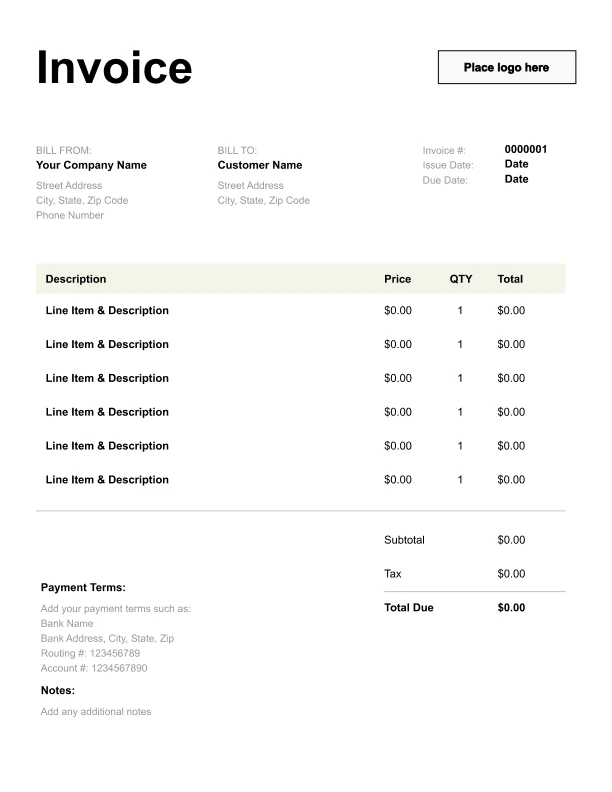
Clean Trucking Invoice Template
A simple, versatile layout for services or products.
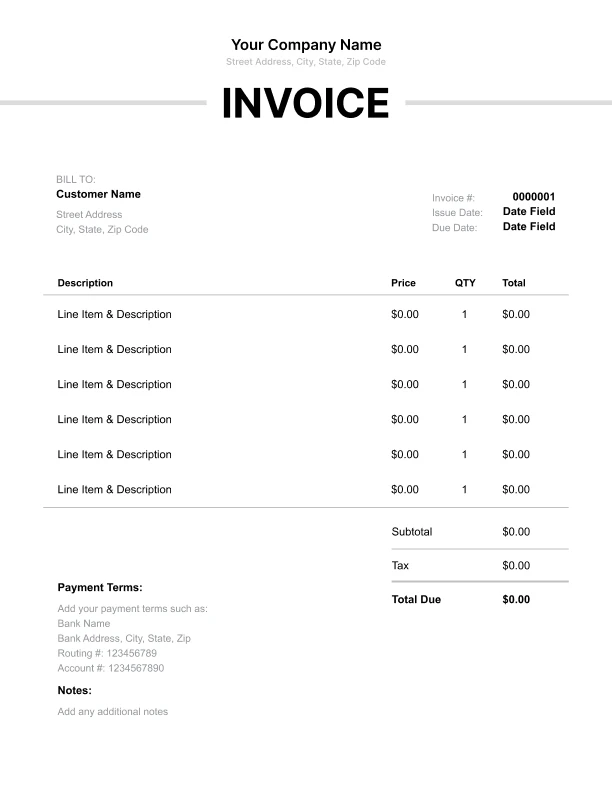
Minimal Trucking Invoice Template
Lightweight design that keeps focus on line items.
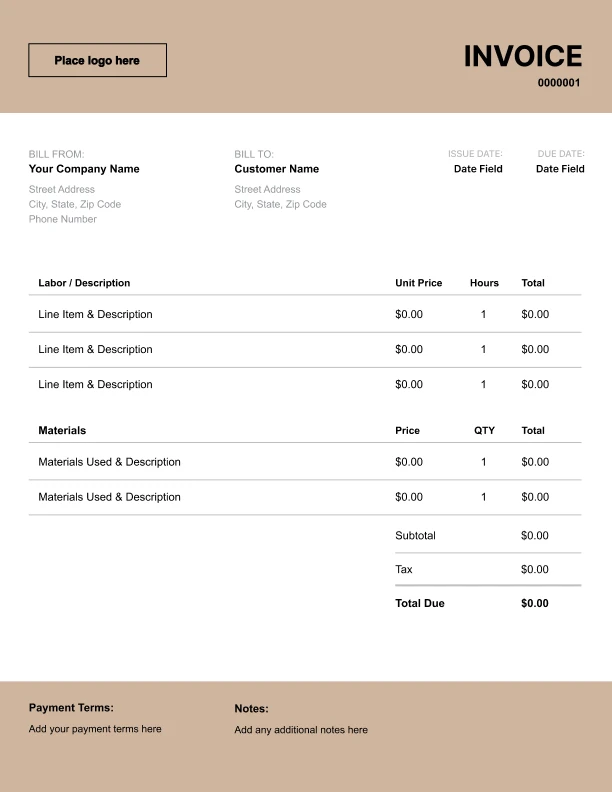
Bold Trucking Invoice Template
Strong structure for large projects or milestones.
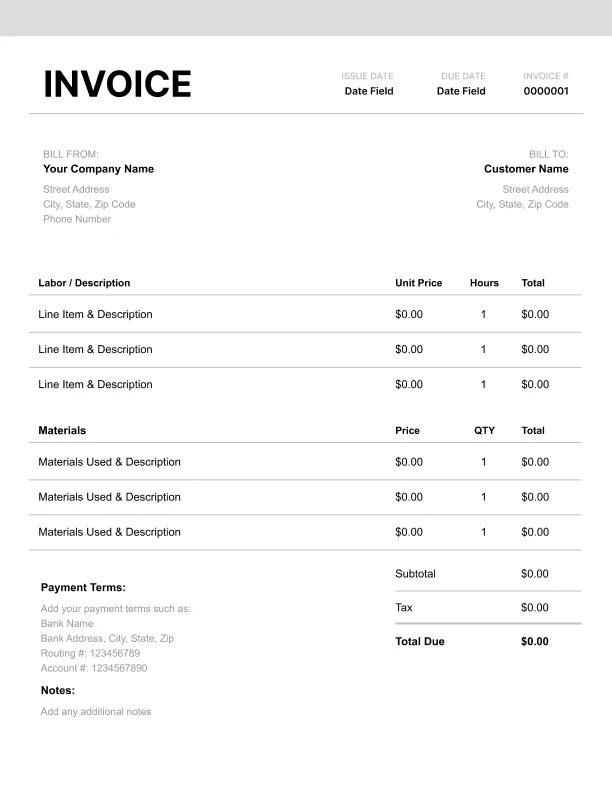
Classic Trucking Invoice Template
Timeless styling that works for any industry.
Simple Trucking Invoice Template
Easy to scan and perfect for quick billing.
Detailed Trucking Invoice Template
Extra room for items, notes, and tax breakdowns.
Modern Trucking Invoice Template
Clean sections with a subtle accent header.
Use Free Trucking Invoice Generator
Prefer a polished, client-ready invoice fast? The generator auto-calculates totals, applies taxes and discounts, and lets you customize your logo and colors.
Trucking Invoice Generator
What to Include on a Trucking Invoice
Trucking invoices are often reviewed by brokers and carrier accounting teams. The fastest way to get paid is to include the shipment identifiers they use to match your invoice to the load.
Carrier and billing details- Carrier name and contact information
- Remit-to address (if different)
- Payment contact email (optional)
- Load number (from broker/shipper)
- BOL number (bill of lading)
- Rate confirmation reference (optional)
- PRO number (if used)
- Pickup and delivery locations (city/state)
- Pickup and delivery dates (optional if needed)
- Equipment type (dry van, reefer, flatbed)
- Trailer number (optional)
- Linehaul (flat rate) or per-mile rate
- Fuel surcharge (FSC)
- Detention (hours × rate)
- Layover, TONU (if applicable)
- Lumper/unloading fees
- Tolls/scales and other reimbursables
- Total amount due
- Payment terms (often Net 30)
- Notes about required documents (POD, BOL, rate con)
Common Trucking Invoice Charges (Accessorials)
Beyond linehaul, many loads include accessorial charges. Itemize them clearly so AP can approve them.
Typical accessorials- Fuel surcharge (FSC): flat amount or % based on lane/rate agreement
- Detention: billed per hour after free time
- Layover: daily charge when driver must wait overnight
- TONU: “Truck Ordered Not Used” when a load is cancelled after dispatch
- Lumper/unloading: third-party unloading fees (often reimbursable)
- Tolls/scales: pass-through costs
Linehaul vs Per-Mile Billing
Carriers invoice either as a flat linehaul rate or per-mile billing depending on the agreement.
Flat linehaul- One charge for the shipment
- Common for brokered freight
- Simple for AP to process
- Miles × rate
- Common for direct shipper relationships or some specialized lanes
- Invoice should note loaded miles vs total miles if your agreement differentiates
Documents That Help Trucking Invoices Get Paid Faster
Many brokers won’t release payment until required documents are received.
Commonly requested- Signed BOL (Bill of Lading)
- POD (Proof of Delivery) if separate
- Rate confirmation reference
- Receipts for lumper/tolls/scales
- Detention/layover documentation (if billed)