Rental Invoice Template
Create professional rental invoices with clear rental periods, item details, rates, deposits, and late fees. This rental invoice template works for equipment rentals, vehicle rentals, and short-term property rentals. Download instantly in PDF, Word, or Excel format.
Download Popular Rental Invoice Templates
Download a ready-to-use PDF template or generate your invoice online in seconds.
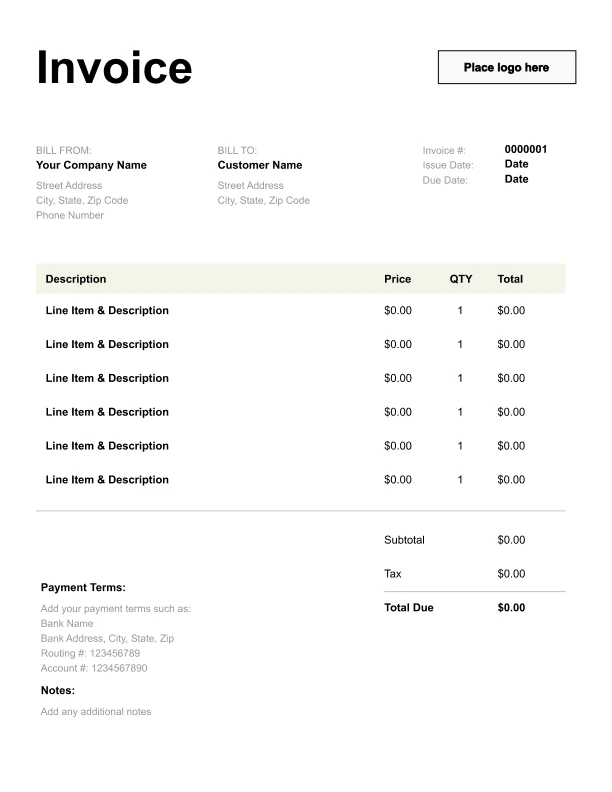
Clean Rental Invoice Template
A simple, versatile layout for services or products.
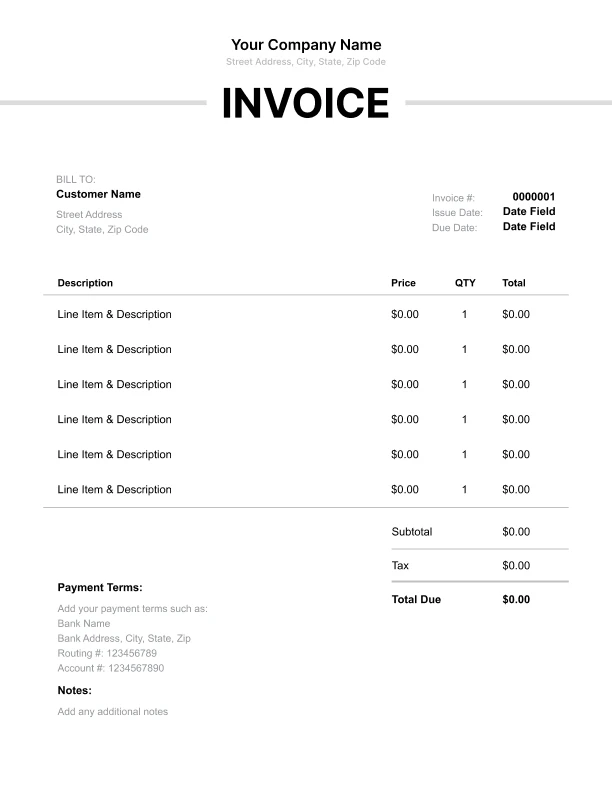
Minimal Rental Invoice Template
Lightweight design that keeps focus on line items.
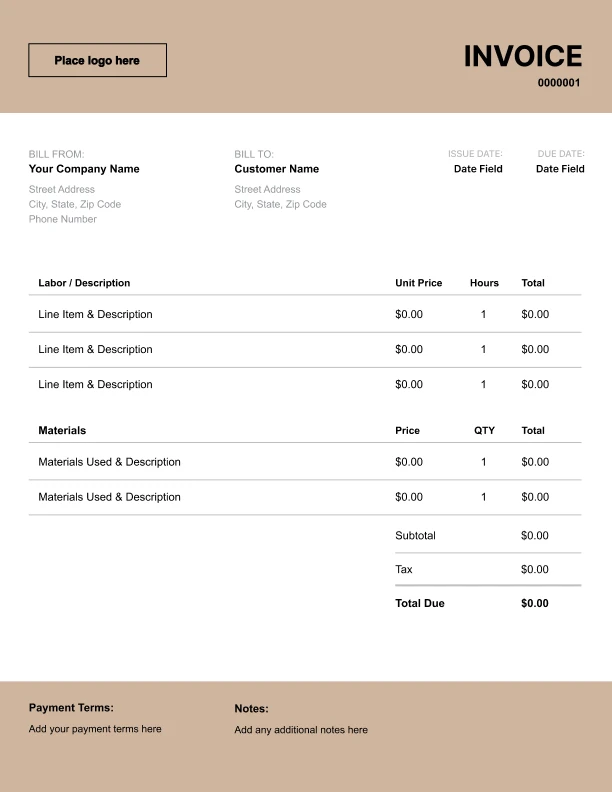
Bold Rental Invoice Template
Strong structure for large projects or milestones.
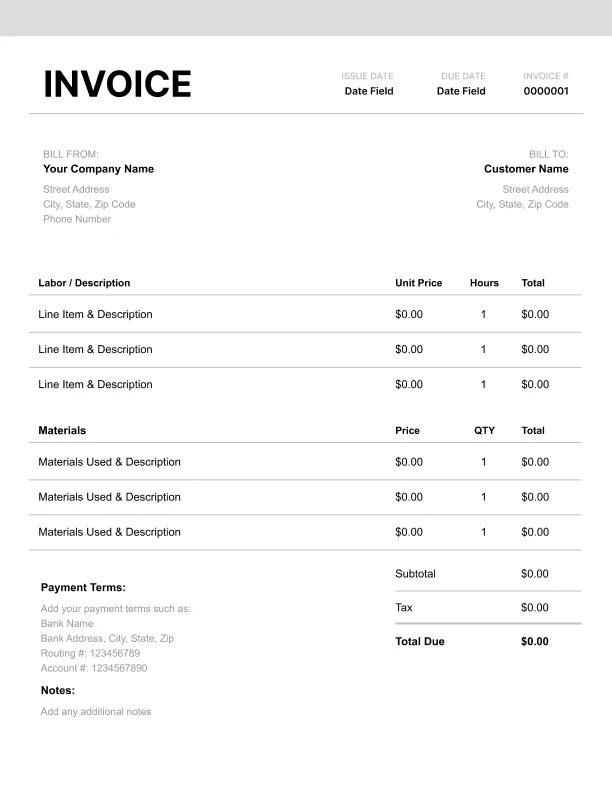
Classic Rental Invoice Template
Timeless styling that works for any industry.
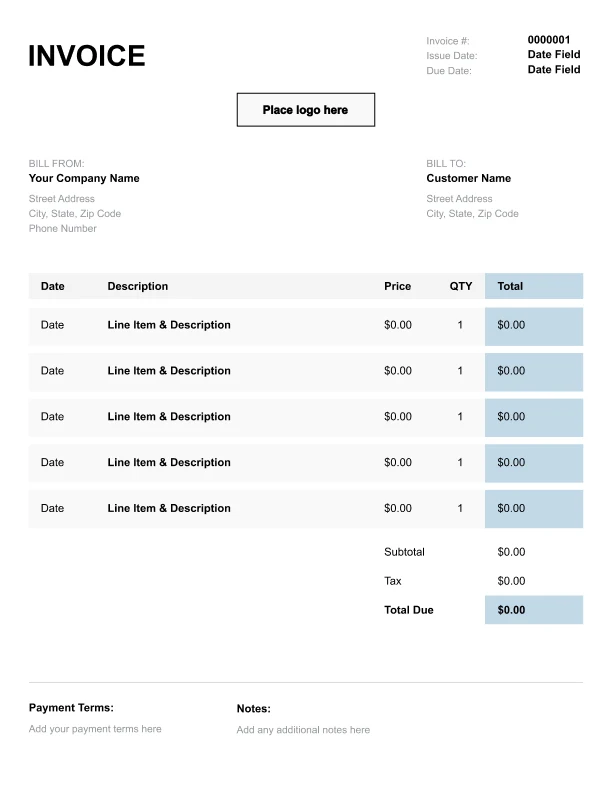
Simple Rental Invoice Template
Easy to scan and perfect for quick billing.
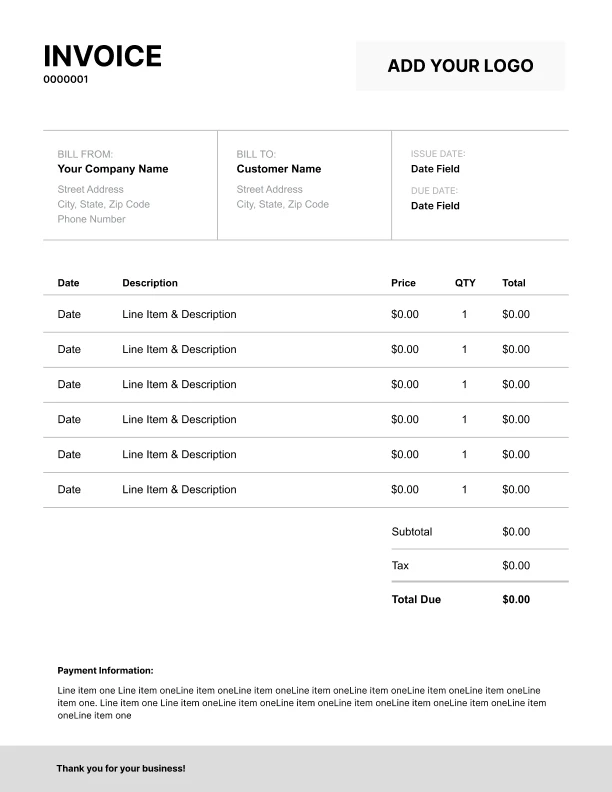
Detailed Rental Invoice Template
Extra room for items, notes, and tax breakdowns.
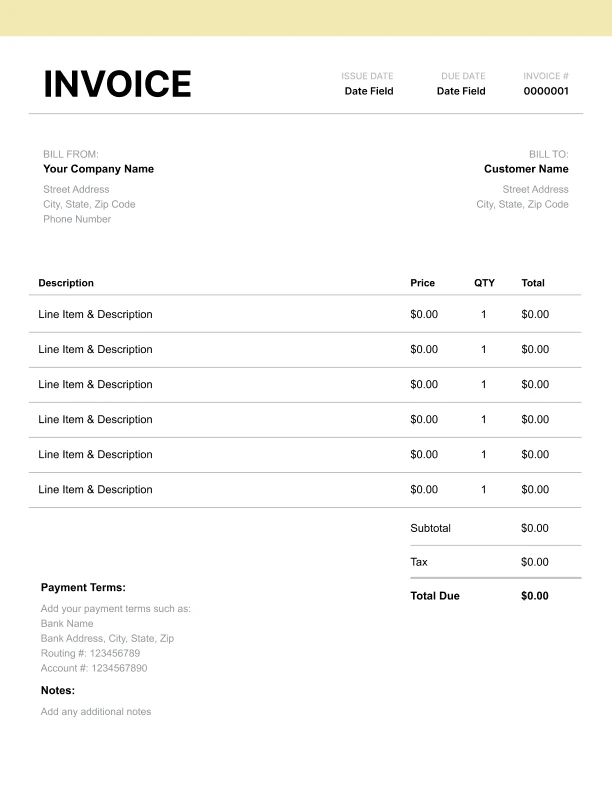
Modern Rental Invoice Template
Clean sections with a subtle accent header.
Use Free Rental Invoice Generator
Prefer a polished, client-ready invoice fast? The generator auto-calculates totals, applies taxes and discounts, and lets you customize your logo and colors.
Rental Invoice Generator
What to Include on a Rental Invoice
Rental invoices should make it easy to understand what was rented, for how long, and what happens if it’s returned late or damaged.
Customer and rental details- Renter name and contact details
- Billing address (and delivery address if different)
- Rental item name/ID (equipment, vehicle, property)
- Rental period (start/end dates or days/weeks)
- Daily/weekly/monthly rental rate
- Quantity (days/weeks) and total rental charge
- Optional add-ons (delivery, accessories, insurance/coverage)
- Security deposit (refundable) shown clearly
- Deposit terms (inspection and refund timeline)
- Discounts (promos, long-term rate)
- Credits (deposit applied to rental, if applicable)
- Late return fee (per day/hour)
- Cleaning fee (if required)
- Damage fee (if applicable)
- Replacement cost (for lost items)
- Subtotal, tax, total due
- Payment terms and accepted payment methods
Common Rental Pricing Structures
Rental businesses typically price in one of these ways:
1) Daily rate
Most common for equipment and short-term rentals. Invoice shows days × daily rate.
2) Weekly rate
Often discounted compared to daily rates. Useful for longer bookings.
3) Monthly rate
Used for long-term rentals and subscriptions. Invoice should show the billing period.
4) Flat fee packages
Common for event rentals or bundled equipment (e.g., “Weekend package”).
5) Add-ons
Delivery/pickup, accessories, consumables, optional protection. Keep add-ons as separate line items so customers understand what’s included.
Security Deposits and Refundable Charges
Deposits are common in rental invoicing and should be clearly explained to avoid disputes.
Best practices- List the security deposit as its own line item
- Clarify whether it is refundable
- State inspection and refund timing (e.g., “refunded within 3–5 business days after return”)
- Explain what can reduce the deposit (damage, missing items, excessive cleaning)
Late Fees, Cleaning Fees, and Damage Charges
Rental invoices often need a clear policy for late returns and condition issues.
Late return fees- Per day or per hour after a grace period
- Should be stated in terms and shown as a line item when applied
- Charged when items are returned excessively dirty
- Common for event rentals, vehicles, and short-term accommodations
- Charged if returned damaged beyond normal wear
- If you assess damage after return, invoice separately or add an adjustment with supporting notes